Thursday, July 13, 2017

Interview with Winton Higgins and Michelle Morgan


Our guests today are Winton Higgins and Michelle Morgan. Winton is the author of Rule of Law. He is a Sydney writer and senior academic. He grew up partly in the outback, and partly in Sydney. He is a graduate of the universities of Sydney, Stockholm and London. After a brief first career in law, he pursued a much longer one as a social-science academic at Macquarie University and UTS, publishing rather than perishing as he went. As a creative writer he won the 2002 NSW Writers’ Centre’s short story competition, and in 2003 published his travel diary, Journey into Darkness. Rule of Law is his first novel. You can connect with Winton via his website.

Michelle Morgan was a former librarian and is now a full-time writer who lives in the Southern Highlands of NSW. Her first YA novel, Racing the Moon, was published in Australia by Allen & Unwin in 2014, and released in the UK and US in 2015. Her latest release, Flying Through the Clouds, was published in April 2017. Four of Michelle's plays have been performed in short play festivals in Sydney, Newcastle and Armidale. You can connect with Michelle via her website, Twitter, Facebook and LinkedIn.

What is the inspiration for your current book?

Winton: In my academic ‘day job’ I research about genocide, and became inspired by reading more deeply into the first Nuremberg trial 1945-6. Here was an epic  drama in which many aspects of modern life first saw the light of day, right down to simultaneous interpreting at transnational events. Yet it’s so badly short-changed in the history books. I felt a great need to bring it back to life using a novelistic approach.

Michelle: I’d been toying with the idea of having my main character learn to fly, so I began researching aviators and flying in the 1930s. When I visited the Gerringong Historical Society’s Museum to see their exhibition on Sir Charles Kingsford Smith’s landing and take-off in Southern Cross from Seven Mile Beach in 1933, I had tingles up and down my spine and could barely talk. That’s when I decided to develop the story around Joe’s dream of becoming an aviator. But I also wanted to create sub-plots and flesh out other characters so readers could relate to the story on many levels.

 Is there a particular theme you are exploring in this book?

Winton: The promoters of the trial pursued the ambition to outlaw aggressive war and human-rights abuses, and to strip even the most high-and-mighty perpetrators of their impunity. They wanted an international rule of law, as the title of my novel makes clear. This is its major theme. A secondary theme concerns what one might call German redemption: the trial set postwar Germany on a long and ultimately successful process of coming to terms with its dark past and emerging as today’s ‘good European’.

Michelle: The title - Flying through Clouds - is a metaphor for adolescence, which is the main theme of the novel.  The book also deals sensitively with many themes and issues, such as: family, friendship, the Depression, resilience, courage, determination, truth, responsibility, survival, fear, loss, grief, bullying, violence, gambling, education and work. Many of the issues that teenagers faced in the 1930s are still relevant today.

Which period of history particularly interests you? Why?

Winton: The 1930s and 1940s, when humanity sank to its lowest depths, but also rose to its greatest heights. This period set the parameters of human evil and human decency.

Michelle: The 1930s are a fascinating period in Australia. Not only did we feel the full impact of the economic hardship of the Depression but we managed to build the Sydney Harbour Bridge and develop an Aviation industry. Our aviators, like CKS, Bert Hinkler and Nancy Bird became famous around the world. Australian cinema, literature and the Arts were thriving. The Australian Broadcasting Corporation was established and the new wireless technology spread throughout the country. Don Bradman was a national hero and Bodyline was a dirty word. After the Depression, serious conflicts developed around the world. Hitler rose to power and World War II was imminent.

What resources do you use to research your book?

Winton: I build on my professional background knowledge and understanding. Beyond that, I’ve used official transcripts, and read many memoirs and contemporary journalistic analyses to get a sense of the participants’ lived experience of the drama, and to glean many fine-grained details about daily life and survival in a devastated, isolated city. And of course Mother Google is always there for me.

Michelle: I spent months reading books about Australia and aviators in the 1930s, and I watched technical videos on how to fly old Gypsy Moths, over and over again. I interrogated everyone I knew who had flown before, and was lucky enough to come across Prue Mason, a children’s author and pilot with extensive experience flying old planes. The Gerringong and District Historical Society’s display on Sir Charles Kingsford Smith was a real inspiration, and I also visited the National Museum in Canberra, Qantas Heritage Collection at Sydney Airport, the Bradman Museum in Bowral, Fleet Air Arm Museum at Nowra, the Temora Aviation Museum and the Queensland Museum as well as small museums in country towns.

While writing Flying through Clouds, I regularly accessed online collections of the National Library of Australia, the State Library of New South Wales, Sydney Living Museums, the Powerhouse Museum, the Dictionary of Sydney and the Glebe Society, as well as the online collections of many other Australian museums and libraries.

What is more important to you: historical authenticity or accuracy?

Winton: I can’t really rank these two, or indeed separate them. My role models all respect (and don’t mess with) the historical record, as I try to do myself. On the other hand I follow them in ‘filling in the gaps’ in that record, so historical characters grow from the stick figures walking across the pages of the history books, into living, breathing human beings with their own quirks, contingencies, fears, loves and conflicts. This transformation renders historical processes truly authentic and arresting.

Michelle: Historical authenticity and accuracy go hand-in-hand. I try to weave historical detail authentically through the narrative and enrich it through the characters and dialogue. It’s only after I have immersed myself in the period and culture that I can start to write and develop the characters. During the editing process, I check for the accuracy of specific historical details that I’ve incorporated to ensure I haven’t used creative license.

Which character in your current book is your favourite? Why?

Winton: Katerina, one of my four point-of-view characters, and a pioneering simultaneous interpreter at the trial. She’s a German war widow and nationalist, one of the conspirators who tried to assassinate Hitler in the last year of the war. She arrives in Nuremberg with her small daughter, and is newly remarried to an Australian airforce officer who works for the British prosecution. She senses the trial’s potential to clear the way for an honourable German revival; she pursues this mission with a will, as she serves the tribunal while grappling with the trauma and loss she herself has suffered in the war.

Michelle: I love all my characters but my favourite is the main character, Joe Riley. Joe is a flawed character, an anti-hero, but occasionally we see some redeeming qualities. Like many teenagers, Joe is strong-willed, independent and thinks he’s invincible. So that readers don’t just perceive him as a petulant teenager, I’ve made him more complex. Joe loves his family, even though he is constantly arguing with them. He is loyal to his friends, is gentle and kind to young children, and has a keen sense of humour. Sometimes though, Joe just can’t seem to put a foot right.

Are you a ‘plotter’ or a ‘pantser’? How long does it generally take you to write a book?

Winton: A plotter for the most part. The time it takes me to write a book varies enormously. Academic ones proceed quite quickly (12 months is my personal best!), but creative writing requires more care, reflection and feedback, and takes much longer.

Michelle: When I start writing a book, I have a general idea of where I’m going, but I’m a pantser. My first draft is all about developing character and voice. When I have a good understanding of my characters and the world in which they live, I become more of a plotter and plot the main turning points of the story. And there’s no story without conflict. But the conflict has to come from the interaction of the characters. During the editing process, I evaluate every scene – What impact will it have? How credible is it? Will it drive the story forward and develop the characters? It took me nearly four years to write and edit Flying through Clouds.

Which authors have influenced you?

Winton: Kate Grenville, Frank Moorhouse, and Hilary Mantel are the stand-outs. Each of them writes powerfully and imaginatively, and exemplifies the approach to writing about historical events and institutions that I consciously follow.

Michelle: These authors have probably influenced me the most: Jackie French, John Marsden, Sofie Laguna, Morris Gleiztman, Marlena Marchetta, Tim Winton, Sonya Hartnett, Ruth Park, Miles Franklin, Harper Lee, J. K. Rowling, F. Scott Fitzgerald, Charles Dickens, Jane Austen and Shakespeare.

What advice would you give an aspiring author?

Winton: First, develop ‘the craft’ of creative writing very carefully, and never feel shy about enrolling in your umpteenth how-to-write programme. (As the old Zen saying goes: if you think you’re getting somewhere, go back to the beginning!) Secondly, join or form a writers’ group whose members read each other’s pre-circulated drafts meticulously, and discuss them in detail at its meetings. It needs to be a group committed to constructive criticism with the aim of seeing its members’ work accepted for publication – not a mutual admiration society.  

Michelle: Keep reading, writing and editing, and get advice from professional editors when you’re ready. I think there’s some truth to the 40% rule – when you think you’ve finished, you’ve only done around 40% of what you need to do to make your manuscript the best it can be.

Tell us about your next book or work in progress.

Winton: While I’m waiting for the Next Big Idea, I’m engaging in some memoir writing that I want to eventually collect into a book (but definitely not an autobiography!)

Michelle: I’m currently working on my first full-length play, which, like the short plays I’ve written, is contemporary and for an adult audience. My next novel will have historical and contemporary settings, but may be for adults rather than young adults.


At the end of World War II, the Allies have to decide what to do with the top Nazi war criminals they’ve captured. Rather than simply shooting them, they take the riskier option of setting up a four-power international tribunal to try them, with maximum publicity and all the requirements of due process met. This bold move triggers a tense and gritty drama involving thousands of war-damaged individuals shipped into Nuremberg, a small bombed-out city in occupied Germany. Once there, the prosecutors and judges, led by prominent British and American lawyers, find themselves isolated from the outside world, starved of basic resources, and flying blind into a trial of unprecedented complexity, length and size, while under the gaze of the international media at every turn.

The novel follows four participants through the preparation and ten-month conduct of the trial: a young GI with a German-Jewish background who gets snapped up by the American prosecutors for his interpreting skills; the former head of German Radio, on trial for his life; a German war widow and pioneer of simultaneous interpreting, now remarried to a British prosecution investigator; and one of the two British judges sitting on the tribunal. Through their eyes and ears, we experience the horrors of Nazi war crimes being revealed to a world public for the first time, the perilous makeshift of the trial process, and the moments of high drama when it seems that the whole edifice is about to collapse. They are participants in this very public enterprise while struggling to lead meaningful private lives and pursue their own ambitions amid the devastation of postwar Germany.

In the epilogue, set in the present day, a startling encounter in the old Nuremberg courtroom gives us a glimpse of the trial’s legacy—for the international rule of law, and for a new culture of German acknowledgment of past criminality that reunification has fostered.

You can purchase Rule of Law via  Abbeys and New South Books.


It’s not easy being a teenage boy growing up in the tough neighbourhood of Glebe in the 1930s. It’s even harder when your dream is to become an aviator, your parents are dead against it, and your girlfriend’s father is the School Principal. But Joe has even bigger challenges he must face and obstacles to overcome if he wants to achieve his dream. He has a plan and won’t let anyone stand in his way.

Flying through Clouds can be ordered from your local bookshop, online suppliers such as Booktopia or on Michelle’s  website.
Racing the Moon is available via Amazon and Book Depository.


Winton Higgins and Michelle Morgan areappearing in our Sydney Meet the Author satellite event on 26 July 2017 at the Gordon Library 799 Pacific Highway, Gordon from 6.00-8.00 pm discussing 'Wings into History: How the Past Inspires Historical Fiction' with Justin Sheedy and Kim Kelly. More information and ticketsare available from the HNSA website. 
                                                               

HNSA 2017 Conference

The HNSA 2017 Melbourne Conference is being held on 8-10 September 2017 at Swinburne University. This celebration of the historical fiction genre will showcase over 60 speakers discussing inspiration, writing craft, research, publishing pathways and personal histories in our weekend programme. Among the many acclaimed historical novelists participating are Kerry Greenwood, Kate Forsyth, Deborah Challinor, Libby Hathorn, Lucy Treloar, Sophie Masson, Sulari Gentill, Robert Gott and Arnold Zable. The HNSA’s speakers’ list is available on the HNSA website.

In addition to the two stream weekend programme, there will be ten craft based super sessions and two research masterclasses.You won’t want to miss our interactive sessions on armour and historical costumes either! Purchase a ticket and you will be entered in the draw to win a $100 Dymocks Gift Card.

Our First Pages Pitch Contest offers an opportunity for submissions to be read aloud to a panel of publishers. And we are delighted to announce the introduction of our inaugural HNSA Short Story Contest with a $500 prize! 


Let’s make a noise about historical fiction!

Monday, July 10, 2017

Imagining the Past Podcast Series: Lucy Treloar


HNSA is proud to announce the release of the next podcast in our series 'Imagining the Past'. This week we bring you Lucy Treloar chatting with our host, Kelly Gardiner about specific issues encountered writing Australian colonial fiction.  The podcast is a taste of what you will hear at the 2017 HNSA Conference in Melbourne from 8-10 September at Swinburne University Hawthorn. More information about the programme is available at our website.


Lucy will be appearing in 'First Encounters and Our Colonial Pasts' with Deborah Challinor, Nicole Alexander, Andrew Peters and Josie Arnold on Saturday 9 September at 11.15-12.15 pm.

Lucy Treloar was born in Malaysia and educated in Melbourne, England and Sweden. A graduate of the University of Melbourne and RMIT, Lucy is a writer, editor, mentor and creative writing teacher, and has worked in Cambodia, where she lived for a number of years, as well as Australia.

Lucy’s debut novel Salt Creek (Pan Macmillan) was published in 2015 to critical acclaim, and has since won an Indie Book Award (Best Debut) 2016 and the ABIA Matt Richell Prize (2016), and been shortlisted for the Miles Franklin Award among others. In 2014 Lucy won the Commonwealth Short Story Prize (Pacific Region).

Lucy’s short fiction has appeared in Sleepers, Overland, Seizure, and Best Australian Stories, and her non-fiction in a range of publications. She is currently working on her second novel – a contemporary fiction set in the US. lucytreloar.com Twitter: @LucyTreloar Facebook: Lucy Treloar Author


Some things collapse slow, and cannot always be rebuilt, and even if a thing can be remade it will never be as it was.

Salt Creek, 1855, lies at the far reaches of the remote, beautiful and inhospitable coastal region, the Coorong, in the new province of South Australia. The area, just opened to graziers willing to chance their luck, becomes home to Stanton Finch and his large family, including fifteen-year-old Hester Finch.

Once wealthy political activists, the Finch family has fallen on hard times. Cut adrift from the polite society they were raised to be part of, Hester and her siblings make connections where they can: with the few travellers that pass along the nearby stock route - among them a young artist, Charles - and the Ngarrindjeri people they have dispossessed. Over the years that pass, an Aboriginal boy, Tully, at first a friend, becomes part of the family.

Stanton's attempts to tame the harsh landscape bring ruin to the Ngarrindjeri people's homes and livelihoods, and unleash a chain of events that will tear the family asunder. As Hester witnesses the destruction of the Ngarrindjeri's subtle culture and the ideals that her family once held so close, she begins to wonder what civilization is. Was it for this life and this world that she was educated?

You can purchase Salt Creek via Booktopia

HNSA 2017 Conference

The HNSA 2017 Melbourne Conference is being held on 8-10 September 2017 at Swinburne University.This celebration of the historical fiction genre will showcase over 60 speakers discussing inspiration, writing craft, research, publishing pathways and personal histories in our weekend programme. Among the many acclaimed historical novelists participating are Kerry Greenwood, Kate Forsyth, Deborah Challinor, Libby Hathorn, Lucy Treloar, Sophie Masson, Sulari Gentill, Robert Gott and Arnold Zable. The HNSA’s speakers’ list is available on the HNSA website.

In addition to the two stream weekend programme, there will be ten craft based super sessions and two research masterclasses.You won’t want to miss our interactive sessions on armour and historical costumes either! Purchase a ticket and you will be entered in the draw to win a $100 Dymocks Gift Card.

Our First Pages Pitch Contest offers an opportunity for submissions to be read aloud to a panel of publishers. And we are delighted to announce the introduction of our inaugural HNSA Short Story Contest with a $500 prize!


Our host:
Kelly Gardiner’s most recent book is ‘1917’ (published early in 2017), a novel for young readers set during the First World War. Her previous books include Goddess, based on the remarkable life of the seventeenth century French swordswoman and opera singer, Julie d’Aubigny. Kelly’s historical novels for young adults include The Sultan’s Eyes and Act of Faith, set during the time of the English Civil Wars and the Inquisition. Both books were shortlisted for the Ethel Turner Prize in the NSW Premier’s Literary Awards. Her books for younger readers are the ‘Swashbuckler’ adventure trilogy – Ocean Without End, The Pirate’s Revenge and The Silver Swan – set in Malta during the Napoleonic invasion, and a picture book, Billabong Bill’s Bushfire Christmas. Kelly has worked on newspapers, magazines and websites, and her articles, poems, book reviews and travel writing have appeared in journals, magazines and newspapers as diverse as ‘The New York Times’, ‘Marie Claire’, ‘New Idea’, and ‘Going Down Swinging’. She works at the State Library of Victoria and teaches creative writing at La Trobe University. Kelly is also the co-host of Unladylike, a podcast on women and writing. Learn more about Kelly at her website. https://kellygardiner.com/

Friday, July 7, 2017

Imagining the Past Podcast Series: Kate Forsyth


HNSA is proud to announce the release of the next podcast in our series 'Imagining the Past'. This week we bring you Kate Forsyth chatting with our host, Kelly Gardiner about her passion for history, fairy tales and writing stories that combine both. The podcast is a taste of what you will hear at the 2017 HNSA Conference in Melbourne from 8-10 September at Swinburne University Hawthorn. More information about the programme is available at our website.


Kate Forsyth will be celebrating her new release, Beauty in Thorns, at our History with a Twist cocktail party at the opening reception on Friday 8 September, 2017. There will be lots of chances to win prizes including a 1:1 Skype session for yourself or your book club with Kate. She will also be appearing at the HNSA Conference on Sunday 10 September in the following panels:

Sunday 10 September from 9-10 am:
Personal Histories: In Conversation with Kate Forsyth and Deborah Challinor

Sunday 10 September from 3.50-4.50 pm
Outside the Comfort Zone: Sex Scenes and Violence - What Authors Dread or Relish


A spellbinding reimagining of 'Sleeping Beauty' set amongst the wild bohemian circle of Pre-Raphaelite artists and poets.The Pre-Raphaelites were determined to liberate art and love from the shackles of convention.

Ned Burne-Jones had never had a painting lesson and his family wanted him to be a parson. Only young Georgie Macdonald - the daughter of a Methodist minister - understood. She put aside her own dreams to support him, only to be confronted by many years of gossip and scandal.

Dante Gabriel Rossetti was smitten with his favourite model, Lizzie Siddal. She wanted to be an artist herself, but was seduced by the irresistible lure of laudanum.

William Morris fell head-over-heels for a 'stunner' from the slums, Janey Burden. Discovered by Ned, married to William, she embarked on a passionate affair with Gabriel that led inexorably to tragedy.

Margot Burne-Jones had become her father's muse. He painted her as Briar Rose, the focus of his most renowned series of paintings, based on the fairy-tale that haunted him all his life. Yet Margot longed to be awakened to love.

Bringing to life the dramatic true story of love, obsession and heartbreak that lies behind the Victorian era's most famous paintings, Beauty in Thorns is the story of awakenings of all kinds.


For more information about Beauty in Thorns and other books by Kate Forsyth, please visit her website. You can connect with Kate on Facebook and Pinterest.

HNSA 2017 Conference

The HNSA 2017 Melbourne Conference is being held on 8-10 September 2017 at Swinburne University. This celebration of the historical fiction genre will showcase over 60 speakers discussing inspiration, writing craft, research, publishing pathways and personal histories in our weekend programme. Among the many acclaimed historical novelists participating are Kerry Greenwood, Kate Forsyth, Deborah Challinor, Libby Hathorn, Lucy Treloar, Sulari Gentill, Robert Gott and Arnold Zable. The HNSA’s speakers’ list is available on the HNSA website.

In addition to the two stream weekend programme, there will be ten craft based super sessions and two research masterclasses. You won’t want to miss our interactive sessions on armour and historical costumes either! Manuscript assessments will be conducted by industry experts, Alison Arnold and Irina Dunn. Our free extended academic programme is open for general admission but bookings are essential.
Our First Pages Pitch Contest offers an opportunity for submissions to be read aloud to a panel of publishers. And we are delighted to announce the introduction of our inaugural HNSA Short Story Contest with a $500 prize!


Our Imagining the Past Host:


Kelly Gardiner’s most recent book is 1917 (published early in 2017), a novel for young readers set during the First World War. Her previous books include Goddess, based on the remarkable life of the seventeenth century French swordswoman and opera singer, Julie d’Aubigny. Kelly’s historical novels for young adults include The Sultan’s Eyes and Act of Faith, set during the time of the English Civil Wars and the Inquisition. Both books were shortlisted for the Ethel Turner Prize in the NSW Premier’s Literary Awards. Her books for younger readers are the ‘Swashbuckler’ adventure trilogy – Ocean Without End, The Pirate’s Revenge and The Silver Swan – set in Malta during the Napoleonic invasion, and a picture book, Billabong Bill’s Bushfire Christmas. Kelly has worked on newspapers, magazines and websites, and her articles, poems, book reviews and travel writing have appeared in journals, magazines and newspapers as diverse as ‘The New York Times’, ‘Marie Claire’, ‘New Idea’, and ‘Going Down Swinging’. She works at the State Library of Victoria and teaches creative writing at La Trobe University. Kelly is also the co-host of Unladylike, a podcast on women and writing. Learn more about Kelly at her website. https://kellygardiner.com/

Sunday, July 2, 2017

Interview with Nicole Alexander


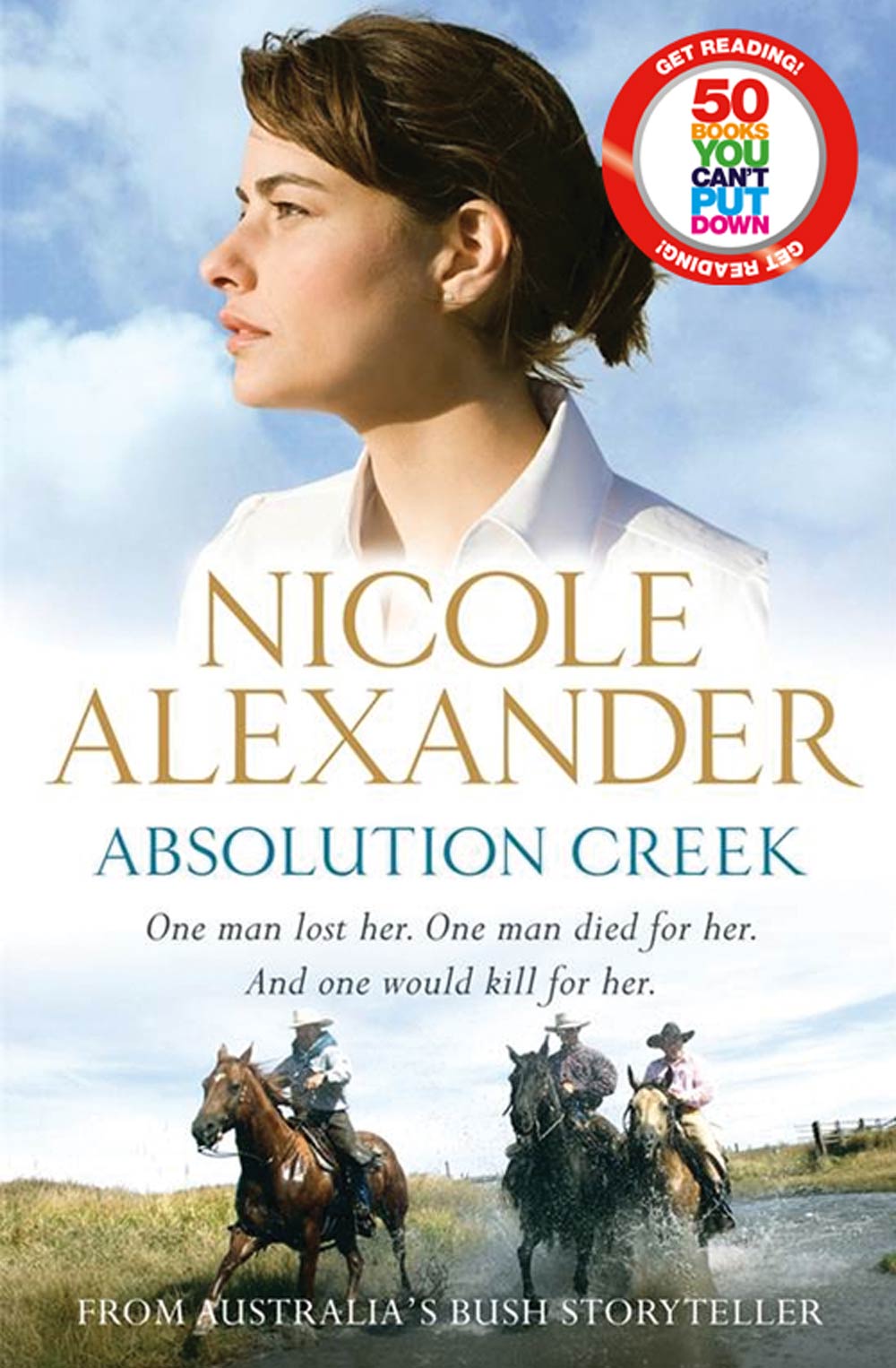
Our guest today is Nicole Alexander who is the author of eight novels: The Bark Cutters, A Changing Land, Absolution Creek, Sunset Ridge, The Great Plains, Wild Lands and River Run. An Uncommon Woman will be released on 3 July 2017. Nicole lives in north-west NSW, Australia and when she's not writing or chatting to book-lovers you can find her on the family property.

The Bark Cutters was short-listed for an Australian Book Industry Award. Both Absolution Creek and Sunset Ridge were chosen for the '50 Books You Can't Put Down' Get Reading campaign. The Great Plains was chosen in Better readings Top 100 Books in both 2015 & 2016.
You can connect with Nicole via her website, blog, Facebook, and Twitter.

What is the inspiration for your current book?

An Uncommon Woman began with an idea based on a 1933 newspaper article in the Tasmanian Examiner. It reported that a woman had purchased a Queensland pastoral station. The fact that this buying of land warranted a headline in an island state far removed from the dusty interior of Australia signified the importance and the uniqueness of the event. The world had just staggered through the great stock market crash of 1929 and was in the grip of a devastating recession and yet here was a woman laying claim to a remote rural property. 


Is there a particular theme you are exploring in this book?

There are a number of themes, however love versus ambition is the predominant one. It’s an interesting theme to address in an historical novel, where your lead character is a female.  In the past and to a limited extent today, women’s lives were curtailed by the dictates of society. For a woman to push through the boundary of conformity and to aspire to a different life in a rural environment in the late 1920s (the period An Uncommon Woman is set), requires the type of character that writers love to conjure from the ether.

Which period of history particularly interests you? Why?

While I have written about our convict and military past, I am drawn to our wider pastoral legacy. We are so much more than our western society origin stories of coastal settlement. And our inland history allows a writer to explore the contribution made to the growth of Australia by all; Indigenous Australians, Chinese, Greeks, Italians etc against the rich tapestry of pastoral life.


What resources do you use to research your book?

Once I’ve decided on a time period and location I then read widely on the subject, both non-fiction and fiction. I utilize archives from state libraries and on-line resources. These may include newspaper articles, family and regional histories, physical and digital books and files. I also investigate my own family’s pastoral records if appropriate. This ensures I get a rounded view of both the period and setting that I’m writing about. It is easy to become immersed in research, so once I’ve begun writing I then only tend to research a specific area on a ‘need-to’ basis.

What is more important to you: historical authenticity or accuracy?

Both are important. While ensuring your work is as realistic as possible is vital, accuracy most definitely has its place. I stick to dates where possible, consider world events and the impact they have on a particular time/characters.

Which character in your current book is your favourite? Why?

In An Uncommon Woman, my main character, Edwina is my favourite.  I wanted her to break free of the restrictions of her gender and the society in which she lived. To forge a place for herself beyond the dictates of men, whether they be father, brother or lover. I wanted her to be feisty and determined. A product of her environment.

Are you a ‘plotter’ or a ‘pantser’? How long does it generally take you to write a book?

I’m definitely a pantser. Many authors love the structure plotting gives them. However I write the first few chapters and then sit back and see how my characters evolve. I don’t want to be so controlled that I don’t have room to manoeuvre if my character leads me in a different direction.
An Uncommon Woman is my eighth novel in eight years. So it takes roughly about 8 months to produce a manuscript.

Which authors have influenced you?

Ernest Hemingway, for his sparse prose, Larry McMurtry, particularly his 1985 western novel, Lonesome Dove. The word epic does actually apply to this work. I love Michael Ondaatje. The English Patient stands out for me and D’Arcy Niland’s Australian masterpiece, The Shiralee. I look for authors who have beautiful prose, intriguing storylines and worlds where the landscape is carefully considered.  

What advice would you give an aspiring author?

You’ll only become a writer if you practice. It’s all about placing your backside in the chair and then… Redraft, redraft, redraft. Make that manuscript shine like a pearl.
Tell us about your next book or work in progress.
At the moment I’m having a short break….


Set in rural Queensland in 1929, An Uncommon Woman is the captivating story of a very modern woman who refuses to be held down by the conventions of the past . . .

Inspired by a real newspaper story from 1933, An Uncommon Woman is an epic tale of duty, ambition, prejudice and love, from the pen of bestselling author Nicole Alexander.

A new world is waiting for her . . .

It’s 1929, and the world is changing. Cars are no longer the privilege of the rich. Hemlines are rising. Movies are talking. And more and more women are entering the workforce.
For Edwina Baker, however, life on her family’s property in Western Queensland offers little opportunity to be anything other than daughter, sister and, perhaps soon, wife.
 
But Edwina wants more. She wants to see the world, meet new people, achieve things. For while she has more business sense than her younger brother, it will be Aiden who one day inherits the family business.

Then the circus comes to town. Banned from attending by her father, Hamilton, Edwina defiantly rides to the showground dressed as a boy. There she encounters two men who will both inadvertently alter the course of her life: pastoralist Mason with his modern city friends; and Will, a labourer who also dreams of escape.

And when the night ends in near-disaster, this one act of rebellion strikes at the heart of the Baker family. Yet it also offers Edwina the rare chance to prove herself in a man’s world. The question is, how far is she prepared to go, and how much is she prepared to risk?
 
 
Many thanks Nicole. Best wishes for the launch of An Uncommon Woman.

Nicole's books are available via Penguin Random House as follows:
An Uncommon Woman, River Run, Wild Lands, The Great Plains, Sunset Ridge, Absolution Creek, A Changing Land and The Bark Cutters.

HNSA 2017 Conference

The HNSA 2017 Melbourne Conference is being held on 8-10 September 2017 at Swinburne University. Nicole Alexander will be appearing on Saturday 9 September at in the following panel:

First Encounters and Our Colonial Past

How do historical novelists approach researching and writing colonial and convict pasts?  What particular challenges must be faced in portraying the meeting of First Peoples with Europeans?  Lucy Treloar, Deborah Challinor, Andrew Peters and Nicole Alexander discuss these issues with Josie Arnold.

This celebration of the historical fiction genre will showcase over 60 speakers discussing inspiration, writing craft, research, publishing pathways and personal histories in our weekend programme. Among the many acclaimed historical novelists participating are Kerry Greenwood, Kate Forsyth, Deborah Challinor, Libby Hathorn, Lucy Treloar, Sophie Masson, Sulari Gentill, Robert Gott and Arnold Zable. The HNSA’s speakers’ list is available on the HNSA website.

In addition to the two stream weekend programme, there will be ten craft based super sessions and two research masterclasses. You won’t want to miss our interactive sessions on armour and historical costumes either! Manuscript assessments will be conducted by industry experts, Alison Arnold and Irina Dunn. Our free extended academic programme is open for general admission but bookings are essential.

Our First Pages Pitch Contest offers an opportunity for submissions to be read aloud to a panel of publishers. And we are delighted to announce the introduction of our inaugural HNSA Short Story Contest with a $500 prize!


Let’s make a noise about historical fiction!


Friday, June 30, 2017

Imagining the Past Podcast Series: Sulari Gentill and Robert Gott


HNSA is proud to announce the release of the next podcast in our series 'Imagining the Past'. This week we bring you Sulari Gentill and Robert Gott chatting with our host, Kelly Gardiner about their fictional detectives and the challenges of co-writing an historical mystery play. The podcast is a taste of what you will hear at the 2017 HNSA Conference in Melbourne from 8-10 September at Swinburne University Hawthorn. More information about the programme is available at our website.


 A reformed lawyer, Sulari Gentill is the author of the Rowland Sinclair Mysteries, seven historical crime novels (thus far) chronicling the life and adventures of her 1930s Australian gentleman artist, and the Hero Trilogy, based on the myths and epics of the ancient world. She lives with her husband, Michael, and their boys, Edmund and Atticus, on a small farm in the foothills of the Snowy Mountains, where she grows French Black Truffles and works in her pyjamas.

Sulari has been shortlisted for the Commonwealth Writers’ Prize – Best First Book, won the 2012 Davitt Award for Crime Fiction, been shortlisted in 2013, 2015 and the 2016 Davitt Award, the 2015 Ned Kelly Award, the 2015 and 2016 Australian Book Industry Award for Best Adult Book, the NSW Genre Fiction Award, commended in the FAW Jim Hamilton Award and offered a Varuna Fellowship. In 2014, Sulari collaborated with National Gallery of Victoria to write a short historical fiction which was produced in audio to feature in the Fashion Detective Exhibition, and thereafter published by the NGV. She was an Ambassador of 2015 Emerging Writers’ Festival and the inaugural Eminent Writer in Residence at the Museum of Australian Democracy. She remains in love with art of writing. Find out more about Sulari at Pantera Press and at her website.

Robert Gott was born in the small Queensland town of Maryborough in 1957, and lives in Melbourne. He has published many books for children, and is also the creator of the newspaper cartoon The Adventures of Naked Man. He is also the author of The Holiday Murders and The Port Fairy Murders. This novel is the fourth in the William Power series of crime-caper novels set in 1940s Australia, following Good Murder, A Thing of Blood, and Amongst the Dead. You can find more information about Robert's books at Penguin Books.

Sulari and Robert will be appearing at the HNSA Conference on Sunday 10 September in Session Two at 10 - 11 am in the following panel:

Historical Whodunits: Solving Clues across the Centuries

Historical mysteries are hugely popular. Why are readers attracted to the addition of history to murder and mayhem? What challenges do writers encounter when creating detectives who lack modern crime kits? Kelly Gardiner asks Sulari Gentill, Robert Gott, Meg Keneally and Gary Corby what ingredients they use to keep their readers guessing to the very last page.

Sulari is also conducting a super session 'The Mystery in History:  A Crime Fiction Workshop for Aspiring Authors' in which she'll take you through the basics and nuances of crime-fiction and the art of making history more than just picturesque backdrop. More information on our website.
And we're delighted that Robert will be our guest speaker at the conference dinner on Saturday 9 September at Glenferrie Hotel.

Sulari's new book, Crossing the Lines, is now available for pre-order. For more information, visit Pantera Press, iTunes, Amazon and Kobo.


When Madeleine d'Leon conjures Ned McGinnity as the hero in her latest crime novel, she makes him a serious writer simply because the irony of a protagonist who'd never lower himself to read the story in which he stars amuses her.

When Ned McGinnity creates Madeleine d'Leon, she is his literary device, a writer of detective fiction who is herself a mystery to be unravelled.

As Ned and Madeleine play out their own lives while writing the other's story, they find themselves crossing the lines that divide the real and the imagined.

This is a story about two people trying to hold onto each other beyond reality.

HNSA 2017 Conference

The HNSA 2017 Melbourne Conference is being held on 8-10 September 2017 at Swinburne University. This celebration of the historical fiction genre will showcase over 60 speakers discussing inspiration, writing craft, research, publishing pathways and personal histories in our weekend programme. Among the many acclaimed historical novelists participating are Kerry Greenwood, Kate Forsyth, Deborah Challinor, Libby Hathorn, Lucy Treloar, Sulari Gentill, Robert Gott and Arnold Zable. The HNSA’s speakers’ list is available on the HNSA website.

In addition to the two stream weekend programme, there will be ten craft based super sessions and two research masterclasses. You won’t want to miss our interactive sessions on armour and historical costumes either! Manuscript assessments will be conducted by industry experts, Alison Arnold and Irina Dunn. Our free extended academic programme is open for general admission but bookings are essential.


Our First Pages Pitch Contest offers an opportunity for submissions to be read aloud to a panel of publishers. And we are delighted to announce the introduction of our inaugural HNSA Short Story Contest with a $500 prize!


Our Imagining the Past Host:


Kelly Gardiner’s most recent book is 1917 (published early in 2017), a novel for young readers set during the First World War. Her previous books include Goddess, based on the remarkable life of the seventeenth century French swordswoman and opera singer, Julie d’Aubigny. Kelly’s historical novels for young adults include The Sultan’s Eyes and Act of Faith, set during the time of the English Civil Wars and the Inquisition. Both books were shortlisted for the Ethel Turner Prize in the NSW Premier’s Literary Awards. Her books for younger readers are the ‘Swashbuckler’ adventure trilogy – Ocean Without End, The Pirate’s Revenge and The Silver Swan – set in Malta during the Napoleonic invasion, and a picture book, Billabong Bill’s Bushfire Christmas. Kelly has worked on newspapers, magazines and websites, and her articles, poems, book reviews and travel writing have appeared in journals, magazines and newspapers as diverse as ‘The New York Times’, ‘Marie Claire’, ‘New Idea’, and ‘Going Down Swinging’. She works at the State Library of Victoria and teaches creative writing at La Trobe University. Kelly is also the co-host of Unladylike, a podcast on women and writing. Learn more about Kelly at her website. https://kellygardiner.com/

Monday, June 26, 2017

Interview with Justin Sheedy


Our guest today is Justin Sheedy who is the author of five books and whether they be don’t-read-on-the-bus-hilarious or cry-in-every-chapter-heroic, he is passionate to share OUR Australian stories. His Australian World War II historical fiction trilogy began with Nor the Years Condemn (2011) followed by Ghosts of the Empire (2013) and now concludes with his latest release, No Greater Love. Sheedy’s saga brings to vivid life a stunning true story in our ANZAC tradition yet one which until now remained untold in Australian historical fiction: the story of how our nation’s best-and-brightest youth volunteered for the most dangerous job of World War II, crossing the planet to become the pilots and aircrew who flew against the might of Nazi tyranny. Given the ‘best-and-brightest’ fact upon which his saga is based, Sheedy hopes his readers will fall in love with his characters, their ensuing loss ramming home for the reader the anti-war message that he intends.

He lives in Sydney where he enjoys connecting with his readers at his regular book signings, via his Facebook, Twitter and blog at Crackernight.com.


What is the inspiration for your current book?

Imagine a man who, when he was 21, was a real-life young superman physically and mentally, beloved by his family due to his sparkling intelligence and personality. Though he volunteered to leave his family and cross the planet to fight the worst evil imaginable. This he did in the most exciting way possible and he won, living to his 90s only to be surrounded by the ghosts of all his friends from the fight who remain forever 21. Imagine his story is true and there were 37 000 young men just like him. Who once lived just down the street from where you live right now. THOSE once young Australians are my inspiration.


Is there a particular theme you are exploring in this book?

In my latest, No Greater Love, an exploration of whether Australia’s history is one of perpetually fighting other people’s wars due to our national selflessness or national lack of self.
Which period of history particularly interests you? Why?
World War Two because, as subject matter for historical fiction, it’s the greatest drama ever. There is no more exciting, heroic, tragic, horrific, good versus evil dramatic story for a writer to bring alive. It’s also when, more than any other time in our Australian history, we showed the world how to win wars.

What resources do you use to research your book?

Veteran interviews, historical fiction & non-fiction, documentaries, family-loaned personal diaries, the internet (often beginning with Wikipedia as a “research road-map” for more detailed research), online correspondence with historical societies and local councils internationally.
What is more important to you: historical authenticity or accuracy?
Authenticity.  My goal & reward is to have my readers thoroughly yet instantly immersed in the history I cover though they may have no prior knowledge or prior interest in it. To immerse them like this I must present the history to them in an accessible way. Though of course I intend forensic-standard accuracy, I find some writers lose their readers with accuracy for its own sake. In a nutshell, if you tell all the facts, you’ll never finish the story, let alone keep your reader happily time-travelling.

Which character in your current book is your favourite? Why?

My main character, Colin Stone.  “Stoney” to all.  A classic ‘rough diamond’ character, the boy from the ‘wrong side of the tracks’ (the mean streets of Great Depression era St. Kilda). He is the abandoned child who becomes the greatest fighter pilot of them all, the soul from the gutter who rises to the top from where he sees a world only worth leaving.  Since creating him, “Stoney” has become real for me and I love him; he’s the underdog, the unselfish hero, the classic Aussie warrior who (based in historical fact) wins war because of the unconventional way he fights it, who lacks respect for Authority because Authority gets young men killed.


Are you a ‘plotter’ or a ‘pantser’? How long does it generally take you to write a book?

A fusion of both.  I think a superb “structure” for any narrative is one of the most rewarding things for the reader and something I strive for by plotting. Yet at my every stage of writing every book I find myself with NO idea what I’ll be writing tomorrow. But this happens SO often that I force myself to say: “You always find it. Have a little faith in yourself.” Re how long it takes me to write a book, from my first, a 365-pager in 4 years, to my fifth, same length in 18 months, seems each time I have to re-invent the wheel a bit less.

Which authors have influenced you?

In terms of my Australian World War Two historical trilogy, I would nominate Ken Follett for his gripping WWII fictions, our Kate Grenville for her emotive Australian historical fictions, and Roald Dahl for the way he evokes his own war experiences as if with the involuntary perfection of a child’s eye.

What advice would you give an aspiring author?

Write what thrills YOU. If you write it well, it will thrill others. To write it well, re-write it until it’s the book it DESERVES to be. (That’s one third Paul Hogan, one third me, one third Peter Carey, and the rest is just good luck.)

Tell us about your next book or work in progress.

Currently polishing a novella to be part of a free ebook “bundle” with other authors as promotional tool for our currently published works. Title of my novella: Other People’s Wars.


To abandoned child, Colin Stone, World War Two grants an escape from the mean streets of St. Kilda. A natural warrior, his talents qualify him to join an elite group of young men. The shining ones. Who fly Spitfires against Nazi tyranny. Rising with them, from the top Colin Stone looks down on a world that has doomed his first true friends.

Bringing to vivid life true Australian war history and events, "No Greater Love" is a saga in the classic mold, featuring the drama, beauty, heroism and horror of one young man's war journey through stunning Malta, Egypt and North Africa, Sicily, England and Europe. It is a portrait of the once-in-a-lifetime characters the war places on his path, of the tragic, wholesale waste of war, on occasion even the profound humanity of his enemy, and of his evolving perception of his world for what it is.

Though standing on its own as a ripping and also highly emotional read, "No Greater Love" is the third and final chapter of Justin Sheedy's now widely and warmly cherished World War Two novel trilogy begun with "Nor the Years Condemn" and "Ghosts of the Empire". Continuing and now concluding their portrait of shining young men destined never to grow old, No Greater Love is the full and rich story of Part 1's reader-favourite character, Aussie rough diamond Colin Stone ('Stoney'). It is the story of his war, of his loyalty and devotion to his friends, of his enduring love for the mother who abandoned him, and his dreams of being held by her once again.

Many thanks Justin for sharing your passion for world war history with us.

You can purchase Justin's books at the following links:

Nor the Years Condemn DYMOCKS – AMAZON

Ghosts of the Empire DYMOCKS – AMAZON

No Greater Love DYMOCKS – AMAZON

HNSA 2017 Conference

The HNSA 2017 Melbourne Conference is being held on 8-10 September 2017 at Swinburne University. Justin Sheedy will be appearing on Sunday 10 September at in the following panel:

Worlds at War: The Appeal of 20th Century Historical Fiction

The history of the early to mid-20th century now falls within the definition of ‘historical fiction’. Why do novels depicting the great conflicts of modern times hold such fascination? And has war fiction replaced Tudor fiction as ‘the favourite flavour’ for readers and publishers? Julian Novitz discusses these questions with Paddy Richardson, Elise McCune, Justin Sheedy and Julian Leatherdale.


Justin Sheedy is also appearing in our Sydney HNSA Meet the Author event on 26 July 6.00 -8.00 pm at Gordon Branch of the Ku-ring-gai Library with Winton Higgins, Kim Kelly, Michelle Morgan and Elisabeth Storrs (Chair). Bookings essential. More details can be found on the HNSA website.

HNSA 2017 is a celebration of the historical fiction genre which will showcase over 60 speakers discussing inspiration, writing craft, research, publishing pathways and personal histories in our weekend programme. Among the many acclaimed historical novelists participating are Kerry Greenwood, Kate Forsyth, Deborah Challinor, Libby Hathorn, Lucy Treloar, Sophie Masson, Sulari Gentill, Robert Gott and Arnold Zable. The HNSA’s speakers’ list is available on the HNSA website.

In addition to the two stream weekend programme, there will be ten craft based super sessions and two research masterclasses. You won’t want to miss our interactive sessions on armour and historical costumes either! Manuscript assessments will be conducted by industry experts, Alison Arnold and Irina Dunn. Our free extended academic programme is open for general admission but bookings are essential.

Our First Pages Pitch Contest offers an opportunity for submissions to be read aloud to a panel of publishers. And we are delighted to announce the introduction of our inaugural HNSA Short Story Contest with a $500 prize!


Let’s make a noise about historical fiction!

Thursday, June 22, 2017

Walking Sydney: History Brought to Life


Our guest today on the HNSA blog is Danielle Castles, one of our fantastic sponsors. She is the owner of Walking Sydney, a tour company with a difference. The ‘Bloke and the Larrikin’ tour involves actors guiding visitors through the rough, colourful and riotous history of Sydney’s Hungry Mile and the Rocks. Danielle’s inspiration for her business is a story in itself. Here it is:

I attended the very first HNSA conference in Sydney 2015 and loved it! I never dreamt I would be a position to contribute as a sponsor in 2017. The conference is an exciting opportunity to discuss what inspires us. We can tell stories in so many ways. My business Walking Sydney takes people on historical walking tours that include performances along the way. At the heart of the stories I tell is a desire to get people wondering about how the past connects to the present and to feel part of a greater whole.

Walking Sydney came into being through a couple of seemingly unrelated events. For a couple of years I’d been regularly making a list of what brought me joy and then one day I compared the lists and circled what was common to them all: writing, walking, history and travel. Et voila! That’s when Walking Sydney was conceived, but only in part.  The inclusion of drama goes back a decade.


I am well-travelled and have mostly travelled independently exploring many places on a whim. I always read a novel and a history book about the country I was visiting. Yet I always felt a powerful yearning to know more. My imagination would binge on a place: I would sit in a village square or lookout trying to absorb a place at a cellular level. It was truly nourishing yet at times quite frustrating. Point and look was simply never enough for me.  

In 2006 I was exploring the Silk Road through Central Asia and read in a guide book about the Juma Mosque in Tashkent, Uzbekistan. The paragraph described the history of the mosque in detail and how it was a mechanics station during the Soviet era. There was one throwaway line, barely a footnote, about how for centuries women were stoned to death there. I felt incredible sorrow. I was angered that cars warranted more lines than the lives of women. All those lives so brutally taken, it was inconceivable to me. So I went there. Driven by an insatiable curiosity and a desire to somehow know them. It was one of the most powerful experiences I have had. In the courtyard of the mosque I became overwhelmed by grief and experienced spirit of place like never before.

Spirit of place has remained the single most powerful source of inspiration for me. When I began to plot out my first walk for Walking Sydney I was sitting outside the old Gas Works along the Hungry Mile and was once again powerfully swept away by spirit of place. And so ‘The Bloke’ was born and the full concept of Walking Sydney came to life.

Writing the stories and scripts for Walking Sydney is twofold: research and creative endeavour. Although the two often blur into one process. There is an incredible thrill when a lead becomes a thread I can weave into my stories. I follow all kinds of leads: newspaper articles of the time are a particularly fabulous source as they cover everything from politics, society, culture, economy, leisure and technology. And from there you never know where you’ll end up. If you write Australian historical fiction then you can’t go past Trove: digitised newspapers and more.

The most invaluable resources I have come across however are librarians, curators and historians. They are sitting on a literal treasure trove of information and seem to love the challenge, or dare I say, the invitation, to locate a helpful story, artefact or snippet of seemingly trivial information! I am grateful for their expertise and helpfulness.  You’d be surprised who will help when you simply ask. I’m currently working on a second tour for Walking Sydney: Queens Cross: wild women of Sydney. They are not who you might expect them to be!

Of course the extra bonus for me is that I see my characters brought to life. It is the most extraordinary and gratifying experience to see your written words evolve and grow into a living breathing emotional psychologically complex being. My actors, Matt Costin and Luke Thornley have proved to be wonderful collaborators. In the process I inadvertently became director and producer as well as storyteller and writer of historical fiction. I’m also currently completing my first historical novel which is set against the backdrop of the Federation Drought at the turn of the 20th Century.

A lot can happen in a couple of years!  I’m very honoured to sponsor the HNSA 2017 Conference. How does it get better than spreading the joy of reading and writing historical fiction? Oh and by the way, when next you’re in Sydney come along with Walking Sydney as we part the veil of time and relive the dramas of the 1870s and 1930s. Look for the special promotional code amongst your conference goodies.


You can connect with Danielle and Walking Sydney via her Website, Instagram and Facebook.

HNSA is incredibly grateful for the support of all our sponsors who are helping to make HNSA 2017 even better than our inaugural conference in Sydney in 2015. For more information on sponsorship opportunities, please visit our website.