
Monday, May 8, 2017

Interview with Robyn Cadwallader


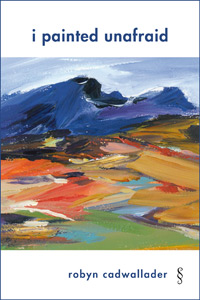
Today we are delighted to welcome Robyn Cadwallader to the blog. Robyn is an editor and writer who lives in the country outside Canberra. She has published poems, prize-winning short stories and reviews, a poetry collection, i painted unafraid (Wakefield Press, 2010) and a non-fiction book about virginity and female agency in the Middle Ages. Her first novel, The Anchoress was published to critical acclaim in 2015 by Fourth Estate (Aust), Faber & Faber (UK), Farrer, Straus & Giroux (US), and Gallimard (France). It was awarded a Canberra Critics’ Circle Award for fiction, was shortlisted for the Indie Book Awards, the Adelaide Festival Literary Awards and the ACT Book of the Year Award, and was longlisted for the ABIA Awards. In response to the government’s shameful policies on asylum seekers, Robyn commissioned and edited a collection of essays and analysis by prominent lawyers and activists, We Are Better Than This (ATF Press, 2015).

You can connect with Robyn via her website and blog, Facebook, Twitter @robyncad and Instagram RobynCadwallader.

What is the inspiration for your current book?

I first found out about anchoresses when researching for my PhD.  I was so fascinated by the idea of women choosing to be locked away, that — even though it seemed unlikely material for a novel — the idea wouldn’t let go of me. When I visited some of the few anchorholds still standing in the UK, I began to imagine one women in her cell, wondering what it would be like, why she was there, how she would survive. She became Sarah in my novel.

Is there a particular theme you are exploring in this book?

There are several interwoven thematic strands in the novel, that emerged via writing about the experience of one anchoress. I’m very interested in the ways in which religious, philosophical and medical teaching from the ancient world through to the Middle Ages constructed the female body as sinful and dangerous, and required it be controlled. It’s the story of patriarchy, of course, and it’s writ large in the imagery of an anchorhold, where a woman is literally sealed into a stone cell, described as dead to the world, and instructed not to look out at the world. The novel explores the ways that the body is nonetheless resistant to control and Sarah discovers that her sensual life, and those of the ordinary village women who visit her, lead her toward God. A sub-theme (is there such a thing?) that I really enjoyed writing about is the variety of ways in which the written word can be used —to encourage, to control, to tell stories and even as a means of resistance, to blackmail the church.
Which period of history particularly interests you? Why?

I can become fascinated in whatever period I read, I think. But the Middle Ages, and specifically England in the thirteenth and fourteenth centuries, grabbed my attention via the literature. Many people (my uni students among them) assume that medieval literature is dry, dusty and always religious, but the stories are vibrant, gutsy, often funny and bawdy. The literature opened up the culture and history for me. It’s fascinating to read about the fourteenth century, a time on the cusp of the Renaissance, but such a gruelling time of famine and climate change, near civil war, plague and a peasants’ rebellion against the crown that almost succeeded. Somehow, people still survived (well, some of them) and created.

What resources do you use to research your book?

Apart from Julian of Norwich’s writings, there are no primary texts by anchoresses. So, I read the many rules written for these women, primarily the thirteenth-century Guide for Anchoresses or Ancrene Wisse, that reflects the contemporary attitude toward women as it offers advice on the inner and outer life of an anchoress. Beyond that, I visited anchorholds and their remains in the UK, I read archaeological evidence about anchorholds, theological writing about women from the early Church Fathers and some later medieval theologians; documents such as cartularies, manor court rolls and statutes; rules of life for monasteries and priories along with maps of villages and priories. Secondary material included descriptions of villages and village life; the creation of manuscripts and a thousand details of medieval life for the nobility and peasantry.  I also found feminist and literary discussions of anchoritic life especially helpful for giving me ways to understand the significance of the primary material I was reading.


What is more important to you: historical authenticity or accuracy?

Authenticity, for sure. We can’t know absolutely what life was like in the past, and whatever we read or write about the past, we do so through the lens of the twenty-first century. It can’t be otherwise. So, while I work hard to be as accurate as possible, my primary interest is in writing an engaging and thoughtful story. I think of my writing as a kind of conversation between myself and the past.

Which character in your current book is your favourite? Why?

Of course I love Sarah, the main character of The Anchoress. I spent so long inside her head, after all! But Eleanor, the little girl who visited Sarah, is my favourite. She has such natural spunk and curiosity, and best of all, she draws out the reclusive scribe, Ranaulf. When I began writing, my own thought was that the village children would be naturally intrigued by this woman locked away where they couldn’t see her: why would she be there? What would she do all day? When was she coming out? I didn’t plan any further than that, but Eleanor kept coming back, and slowly she became incredibly important to Sarah. She was easy to write, as if she insisted on being in the novel in exactly the same way that she insisted on chatting with Sarah; she was always simply ‘there’.

Are you a ‘plotter’ or a ‘pantser’? How long does it generally take you to write a book?

I’m a thorough pantser. No idea where I’m headed beyond a vague sense of the story’s general shape. I love the feeling of writing something completely unexpected that takes the story in a different direction from what I had imagined. Even better, is coming back to a scene or image that had seemed random and perhaps irrelevant, to the connections it makes to other areas of story and character.  My image is the familiar one of driving down a country lane, this time in my old VW beetle with terrible headlights, able to see only a few metres ahead of me; all I can do is trust that by the time that ground is covered, the next few metres will come into view. It doesn’t always happen and sometimes it’s overwhelming, sometimes I end in a ditch, but it’s the process that I trust.

Which authors have influenced you?

As a writer of historical fiction, I have to say Hilary Mantel, primarily, for her capacity to write about history with such wit and such strong characters, not an ounce of history-speak. I also love Jim Crace’s approach to historical fiction as well. They both grasp the authority and creativity of the writer first of all, unconstrained by the idea of writing about history. I know Mantel takes accuracy seriously, but she can push outside that when she wants to, and it works so well. I’m in awe of them both.

What advice would you give an aspiring author?

Be wary of any advice that is absolute, any do, don’t or should. So, this is what I tell myself: read, write and write some more. Be brave, take risks. Trust yourself. I’ve found that writing historical fiction, I have to continually be aware of the dangers of being stifled and falling into ‘history-speak’ (see question 8), that slightly artificial way of writing and story telling. I try to stretch out my literary arms and write with some freedom, letting the characters be people, not historical mouthpieces. 

Tell us about your next book or work in progress.

My next book is set in early fourteenth-century London and tells the story of a group of secular illuminators of medieval manuscripts.


From a remarkable new Australian author comes THE ANCHORESS, a story set within the confines of a stone cell measuring seven paces by nine. Tiny in scope but universal in themes, it is a wonderful, wholly compelling fictional achievement.

Set in the twelfth century, THE ANCHORESS tells the story of Sarah, only seventeen when she chooses to become an anchoress, a holy woman shut away in a small cell, measuring seven paces by nine, at the side of the village church. Fleeing the grief of losing a much-loved sister in childbirth and the pressure to marry, she decides to renounce the world, with all its dangers, desires and temptations, and to commit herself to a life of prayer and service to God. But as she slowly begins to understand, even the thick, unforgiving walls of her cell cannot keep the outside world away, and it is soon clear that Sarah's body and soul are still in great danger ...

Telling an absorbing story of faith, desire, shame, fear and the very human need for connection and touch, THE ANCHORESS is both mesmerising and thrillingly unpredictable.

Many thanks for sharing your journey with us, Robyn. 

You can purchase Robyn's books via these links: 
The Anchoressi painted unafraidWe are Better Than This and Three Methods for Reading the Thirteenth-Century Seinte Marherete.

HNSA 2017 Conference

The HNSA 2017 Conference in Melbourne is being held on 8-10 September 2017. This celebration of the historical fiction genre will showcase over 60 speakers discussing inspiration, writing craft, research, publishing pathways and personal histories in our weekend programme. Robyn Cadwallader will be appearing on Saturday 9 September in Session 2.15-3.15 pm.

Venturing forth: Exploring Stories beyond National Boundaries and Australasian History
Kelly Gardiner discusses with Robyn Cadwallader, Natasha Lester, Prue Batten and Elisabeth Storrs why some authors prefer to discover worlds beyond their native shores and ancestral history.

Among the many acclaimed historical novelists participating are Kerry Greenwood, Kate Forsyth, Deborah Challinor, Lucy Treloar, Sophie Masson, Sulari Gentill, Robert Gott and Arnold Zable. The HNSA’s speakers’ list is available on the HNSA website.

In addition to the two stream weekend programme, there will be ten craft based super sessions and two research masterclasses. You won’t want to miss our interactive sessions on armour and historical costumes either! Manuscript assessments will be conducted by industry experts, Alison Arnold and Irina Dunn. Our free extended academic programme is open for general admission but bookings are essential.

Our First Pages Pitch Contest offers an opportunity for submissions to be read aloud to a panel of publishers. And we are delighted to announce the introduction of our inaugural HNSA Short Story Contest with a $500 prize!


Let’s make a noise about historical fiction!

Interview with Julian Leatherdale


Today we welcome Julian Leatherdale to the blog. Julian Leatherdale was a researcher/photo editor for the Time-Life 'Australians At War' series and later co-writer/researcher on ABC-Film Australia TV history documentaries 'The Forgotten Force' and 'Return To Sandakan'. His novel Palace of Tears (Allen & Unwin, 2015) was published by HarperCollins Germany in May 2016 and as an audiobook (Bolinda, 2016). His next novel The Opal Dragonfly will be published by A&U in March 2018.

You can find out more about Julian on his website or contact him through Facebook.

What is the inspiration for your current book?

As a Blue Mountains local for over 25 years, I have long been fascinated by the magnificent (if eccentric) Hydro Majestic hotel at Medlow Bath which always struck me as a grand folly in the Australian bush. I was convinced by research into founder Mark Foy and his ambitious hotel that I had an ideal setting for an atmospheric Gothic tale. By chance, German aspects of the Hydro’s history (such as spa water shipped from Baden Baden, and a legendary visit by armaments heiress Baroness von Krupp) prompted me to explore a neglected chapter of Australian history that has troubled me for years: the internment of German-Australians during World War I. Palace of Tears weaves this shameful chapter into a suspenseful family saga.

Is there a particular theme you are exploring in this book?

Yes, a theme of 'Australian identity’ is explored in a number of ways. Hotelier Adam Fox (modelled on Mark Foy) is a well-travelled cosmopolitan whose international tastes are reflected in his luxury spa hotel. Foy’s vision in 1904 was praised as a brash patriotic claim by a young nation to be as cultured as the Old World. But how do we adapt a British-European perspective to a new landscape and society without risking cultural cringe? Several characters grapple with this problem: a children’s writer with her ‘bush’ fairy tale, a Romantic landscape painter (inspired by Eugene von Gerard) and his artist daughter, and a nature photographer. The story of German-Australian internment in Palace of Tears goes to the heart of what defines an Australian citizen. To stiffen public resolve for the war and prove its loyalty to the British ‘race’ and Empire, the wartime government targeted Australian citizens of German descent (then the largest non-Anglo migrant community) as ‘enemy aliens’, interning nearly 7,000 and deporting over 6,000 after the war ended. 

Which period of history particularly interests you? Why?

Early in my career I worked as a researcher-writer and photo-editor on a military history series 'Australians at War' published by Time-Life and later as a researcher-scriptwriter on two TV documentaries about the post-war occupation of Japan and POWs respectively. For a long time, my interest was in WW II and its aftermath because of the profound cultural and political changes to Australian society. But having finished novel two and starting novel three, I have become intrigued with the mid-19thC colonial period and the late 1920s. So much to explore and discover!


What resources do you use to research your book?

As a picture-editor and researcher in a past life, I love archival images (photos and artworks) as ignition points for the imagination. I research academic books and journals as well as biographies and memoirs and could not survive without TROVE. For Palace of Tears I listened to oral history interviews with Foy’s grand-daughter, and the cast of a (now lost) film shot by Raymond Longford at the Hydro in 1924. I inspected the Hydro site (then under refurbishment). For my next book The Opal Dragonfly (set in 1850s Sydney) I read diaries, letters and speeches of the period and visited Juniper Hall, Elizabeth Bay House and Susannah Place in The Rocks. For writing style and themes, I read A House is Built by Barnard-Eldershaw (published in 1928 and set in 1840s-50s Sydney).

What is more important to you: historical authenticity or accuracy?

I would probably favour authenticity over accuracy depending on definitions. Glaring factual errors cannot be tolerated because they sabotage narrative credibility. But I am wary of the danger of over-researching which can paralyse creativity and overwhelm story-telling with too much detail. I strive for accuracy but my overall aim is for authenticity in the characters’ outlook and engagement with the major preoccupations of the time. The demands of character and story always come first. With my next book, I hope to address reader concerns about where the history ends and the fiction begins with detailed end notes.


Which character in your current book is your favourite? Why?

To be honest, I don’t have favourites. I love all the female characters in Palace of Tears for their different qualities: the fiery artist Freya, the vulnerable and courageous Angie, the haughty but sad Adelina Fox, the prickly and self-absorbed writer Monika and her lonely daughter Lisa. The biggest surprise for me was the character of Adam Fox, the charismatic but ruthless hotelier. My original intention was to present him only from the point of view of other characters but when that proved impossible I had to then occupy his thoughts and make sense of his self-justification. That was a confronting challenge and made for a complex and interesting character.


Are you a ‘plotter’ or a ‘pantser’? How long does it generally take you to write a book?

I am a bit of both in that I ‘pants’ my way through a first draft with certain plot-points in mind but don’t over prepare because I want to be open to discovery and to surprise myself. About half way through I may start to ‘plot’ more thoroughly with chapter summaries and diagrams to keep track of chronology, sub-plots and character arcs. I have only written two books so it is hard to generalise about how long it takes: Palace of Tears took two years including research and The Opal Dragonfly has taken about the same.

Which authors have influenced you?

I loved Jessica Anderson’s The Commandant and regard it as a benchmark for Australian historical fiction writing. I am also a big fan of Thomas Keneally’s work; I recently reread The Chant of Jimmy Blacksmith and admired the boldness and beauty of the writing. In the last year, I have discovered Sarah Waters and Kate Atkinson and enjoyed their individual approaches to historical fiction. Other writers I admire and look to for inspiration include Thomas Hardy, Margaret Atwood, and A.S. Byatt.

What advice would you give an aspiring author?

Don’t give up your day job! Read widely and sometimes outside your comfort zone. Support your fellow Australian authors as you will appreciate this support when you are published one day. Be humble when it comes to criticism as the writing journey is one of never-ending learning.

Tell us about your next book or work in progress.

I have just finished a major redraft of my second novel, The Opal Dragonfly, due for publication by A&U in March 2018. It is set in 1850s Sydney and centres around a fictionalised version of Elizabeth Bay House, ‘the finest house in the colony’ in the wealthy enclave of Woolloomooloo Hill (now Kings Cross). It is told from the point of view of Isobel, the youngest daughter of the Surveyor-General of NSW, Sir Angus Macleod (based on Thomas Livingstone Mitchell) and opens with her witnessing a pistol duel between her father and his public enemy. We follow Isobel’s childhood friendship with an Aboriginal girl and troubled romance with a famous artist against the backdrop of her family’s misfortunes.

Thanks for joining us, Julian and sharing your journey.

You can purchase Palace of Tears here.


Angie loved Mr Fox’s magnificent, absurd hotel. In fact, it was her one true great love. But…today Angie was so cross, so fed up with everybody and everything, she would probably cheer if a wave of fire swept over the cliff and engulfed the Palace and all its guests.

A sweltering summer’s day, January 1914. The charismatic and ruthless Adam Fox throws a lavish birthday party for his son and heir at his elegant clifftop hotel in the Blue Mountains. Everyone is invited except Angie, the girl from the cottage next door. The day will end in tragedy, a punishment for a family’s secrets and lies. 

In 2013, Fox's grand-daughter Lisa seeks the truth about the past. Who is this Angie her mother speaks of: 'the girl who broke all our hearts'? Why do locals call Fox’s hotel the ‘palace of tears’? Behind the grandeur and glamour of its famous guests and glittering parties, Lisa discovers a hidden history of passion and revenge, loyalty and love.

A grand piano burns in the night, a séance promises death or forgiveness, a fire rages in a snowstorm, a painter’s final masterpiece inspires betrayal, a child is given away. With twist upon twist, this lush, strange mystery withholds its shocking truth to the very end.

HNSA 2017 Conference

The HNSA 2017 Conference in Melbourne is being held on 8-10 September 2017 at Swinburne University, Hawthorn. This celebration of the historical fiction genre will showcase over 60 speakers discussing our theme, inspiration, writing craft, research, publishing pathways and personal histories. Among the many acclaimed hisorical novelists participating are Kerry Greenwood, Kate Forsyth, Deborah Challinor, Lucy Treloar, Sophie Masson, Sulari Gentill, Robert Gott and Arnold Zable. The HNSA’s speakers’ list is available on the HNSA website.

Julian Leatherdale will be appearing at the following panel in Session 4 on Saturday 9 September at 12.15 - 1.15pm with Elise McCune, Justin Sheedy and Paddy Richardson.

Worlds at War: The Appeal of 20th Century Historical Fiction

The history of the early to mid-20th century now falls within the definition of ‘historical fiction’. Why do novels depicting the great conflicts of modern times hold such fascination? And has war fiction replaced Tudor fiction as ‘the favourite flavour’ for readers and publishers? Julian Novitz discusses these questions with Paddy Richardson, Elise McCune, Justin Sheedy and Julian Leatherdale.


In addition to the two stream weekend programme, there will be ten craft based super sessions and two research masterclasses. You won’t want to miss our interactive sessions on armour and historical costumes either! Manuscript assessments will be conducted by industry experts, Alison Arnold and Irina Dunn. And there are two calls for papers in our free extended academic programme.

Our First Pages Pitch Contest offers an opportunity for submissions to be read aloud to a panel of publishers. And we are delighted to announce the introduction of our inaugural HNSA Short Story Contest with a $500 prize!

Let’s make a noise about historical fiction!

Friday, May 5, 2017

Interview with Julianne Miles-Brown


From an early age storytelling encompassed Julianne Miles-Brown’s life, writing stories about ghosts and mysteries in an eerie house in the Blue Mountains in which she lived some of her childhood. Julianne writes historical stories of fiction and non-fiction for both adults and children. She also loves to write picture books and the creative format of text and illustrations.With a degree in Creative Writing, she became more involved in literature, by taking over the role of Director of the Writers’ Unleashed festival in the Sutherland Shire in Sydney. Julianne enjoys the challenges it presents, and meeting and networking with the various authors and publishers in the writing industry. Between her writing you’ll find her running or walking in the national park or beach and spending time with her husband and two boys.

You can connect with Julianne on Twitter, Facebook or via her websites Julianne Miles-Brown and History Storyteller.

What is the inspiration for your current book?

In my current book Misadventure I wanted to lift the barriers that can stop us from attempting our goals, from others and within ourselves. I also wanted to show the differences and the similarities that we all possess.

Is there a particular theme you are exploring in this book?

The theme of division and how it influences and guides us is the main one. In 18th century Europe, class, sex, religion, race and also the place you were from, influenced them to a huge degree.
I wanted to blend the idea of what constitutes the different classes and heritage of my characters, which was so divided. By blend I mean to have the characters in a different place in which to survive (from a shipwreck). This was to illustrate that no matter what our heritage or social status that it all depends on what’s inside of us that’s important as to who we really are.

Which period of history particularly interests you? Why?

There is no specific period of history that I can pinpoint. Mainly I would lean towards Australian history, as I have more knowledge in relation to our country. All places and time of history gives such fodder to learn from.

What resources do you use to research your book?

  • Museums – Maritime Museum, Vaughan Evans Library and Mitchell library.
  • Artefacts and a variety of non-fictional books, both historical and books printed from the particular time in history. Films about this period, such as The Colony, (SBS series) and The Secret River (ABC mini series).
  • Diaries/logs from that period of time.
  • First hand experience. We cannot go back in a time machine but we can experience their life the way they did. I spent an overnight stay on the HMB Endeavour in Sydney Harbour, sleeping in a hammock and having dinner/breakfast on board. A great experience.


What is more important to you: historical authenticity or accuracy?

Historical authenticity. When writing historical fictional I try to have an accuracy of details but I’m not an expert in all fields. There are some details that I would like to research even further.

Which character in your current book is your favourite? Why?

The main character Lavinia. She is born into privilege of the middle class and can be annoying at the start. She needs to overcome her own prejudices to accept all the people around her and who they are. By the conclusion of the novel she has changed and realises that her viewpoint and desires are not the same.

Are you a ‘plotter’ or a ‘pantser’? How long does it generally take you to write a book?

A pantser. For Misadventure I wrote chapter by chapter but with a flow of ideas. Sometimes I would write a section that may have been at the end, or middle of the novel. I need to let the characters and the plot travel on their own journey.
This is my first novel – took around 10 years (this included many intermissions, such as finishing my degree and my 2 beautiful young sons coming along.)

Which authors have influenced you?

Kate Morton, Michael Crichton, Kate Forsyth, Gabrielle Lord, John Boyne, Emily Bronte, Elizabeth Kostova, Kate Grenville, Anthony Doerr, David Malouf, Hannah Kent. Growing up, all the girls’ mystery books such as Nancy Drew and later Agatha Christie and G K Chesterton. Specific books that I love:  Remembering Babylon, by David Malouf and All the Light We Cannot See, by Anthony Doerr.

What advice would you give an aspiring author?

Keep writing, even when motivation or direction appears unclear. The book The Artists Way by Julia Cameron, is great for removing blockages and to write morning notes. Keep the fire alight, take notes, keep writing and also talk to other writers.


Tell us about your next book or work in progress.


I intend to write a novel that explores fears and how they can develop and the reaction to fear. I’m in the process of brainstorming the different historical times. I also hope to explore the thylacine’s extinction in perhaps a novella or short story.

Good luck with Misadventure, Julianne. Thanks for sharing your experiences with us. And Writers' Unleashed looks wonderful. Please add 19th August to your diaries!


Julianne Miles-Brown will be appearing at our free Sydney Meet the Author satellite event on 29 May 2017  at Sutherland Library, 30-36 Belmont St, Sutherland from 6.30-8.30 pm with Isolde Martyn, Elisabeth Storrs and Debbie Robson discussing 'Follow that Horse! All you ever wanted to know about researching, writing and publishing historical fiction.' The event is free but bookings are essential via Event Brite. More details are available at the HNSA website.

HNSA 2017 Conference

This celebration of the historical fiction genre will showcase over 60 speakers discussing inspiration, writing craft, research, publishing pathways and personal histories in our weekend programme. Among the many acclaimed historical novelists participating are Kerry Greenwood, Kate Forsyth, Deborah Challinor, Lucy Treloar, Sophie Masson, Sulari Gentill, Robert Gott and Arnold Zable. The HNSA’s speakers’ list is available on the HNSA website.

In addition to the two stream weekend programme, there will be ten craft based super sessions and two research masterclasses. You won’t want to miss our interactive sessions on armour and historical costumes either! Manuscript assessments will be conducted by industry experts, Alison Arnold and Irina Dunn. Our free extended academic programme is open for general admission but bookings are essential.

Our First Pages Pitch Contest offers an opportunity for submissions to be read aloud to a panel of publishers. And we are delighted to announce the introduction of our inaugural HNSA Short Story Contest with a $500 prize!


Let’s make a noise about historical fiction!

Monday, May 1, 2017

Interview with Pamela Hart


We are honoured to welcome Pamela Hart to the blog today. Pamela is an award-winning author of historical novels. Her most recent novel is A Letter from Italy, set in 1917, which tells the story of a pioneering woman war correspondent. Her first novel, The Soldier’s Wife, was based on her grandfather’s experience of being wounded at Gallipoli and his life after he returned to Australia.

Writing as Pamela Freeman, she is well-known as a children’s writer; and won the NSW Premier’s History Prize for The Black Dress: Mary MacKillop’s Early Years.   Pamela also writes epic fantasy for adults, and her fantasy series, The Castings Trilogy, is published worldwide by Hachette.

Pamela’s awards include two Aurealis Awards, the Wilderness Society’s Environment Award, and the ASO Librarian’s Choice award for her most recent children’s book, Desert Lake. She has been shortlisted for Book of the Year, the NSW Premier’s Literary Awards, and the Koala Awards. Pamela has a Doctor of Creative Arts degree from UTS, and is the director of creative writing at the Australian Writers’ Centre. 

You can connect with Pamela through Facebook, Twitter and her website. And you can subscribe to her newsletter here.

What is the inspiration for your current book?

Louise Mack was the first woman war correspondent who went to the front lines – and she was an Australian! She became the editor of the Sydney Morning Herald Women’s Pages, and I discovered her astonishingly feminist editorials when I was researching The Soldier’s Wife.  She inspired my character Rebecca Quinn, in A Letter from Italy, a journalist who is trying to get off the Women’s Pages and report ‘real’ news.

Is there a particular theme you are exploring in this book?

I guess it’s about surmounting the obstacles that the world puts in your way – both my main characters have to overcome prejudices and barriers to achieving their professional aims (and a big barrier to achieving the wishes of their hearts, as well).

Which period of history particularly interests you? Why?

I’m fascinated by all history, but I’m writing mostly about 1910 to 1930 – I started by writing a book based on family history, but every time I research one book I find so many more stories I want to write, so I guess I’ll be writing about this period for a while! It was a time when huge world events catastrophically intervened in ordinary people’s lives.  WWI was an unprecedented event – the first truly world event – and its effects were felt for decades after.

What resources do you use to research your book?

My main resource is Trove, the National Library’s online digitised newspapers in particular.  I also subscribe to overseas newspaper archives, as reading the newspapers of the day is the best way to get into the heads of those living at the time (also, the ads tell you how much everything cost!). Of course, I also use books, maps and, very importantly, historical photographs.

What is more important to you: historical authenticity or accuracy?

I’m not sure I see a conflict between the two. Surely if you’re accurate you’re also authentic? If you mean, ‘are the facts more important than the feel of the story?’, then I would come down on the side of the facts when changing those facts would mislead your readers. This is particularly important when dealing with crucial events. I’d never change the date of a battle, for example. But I might shift what month a book was published in so that my character could read it at a particular point in her life.

Which character in your current book is your favourite? Why?

Nonna Rosa – because I had so much fun writing her!  She is my main male character’s grandmother, and is not at all like the grandmother he would like to have. It’s always fun writing an older person with a bit of a past…

Are you a ‘plotter’ or a ‘pantser’? How long does it generally take you to write a book?

I’m a book-a-year author for Hachette, so the actual writing takes me a year, but I am often thinking about books several years in advance.  Last week I got the idea for the book after the book after next! I find that having that lead time to ‘cook’ the idea makes for a much better book. As for plotting or pantsing – it changes with each book. Generally, though, by the time I’m 1/3 into it, I know roughly where I’m going.

Which authors have influenced you?

Oh, so many!  In historical fiction, Georgette Heyer, Mary Renault,  Mary Stewart, Kate Forsyth. In other genres… Dorothy L Sayers, Tolkien, Zenna Henderson… too many to count!

What advice would you give an aspiring author?

The difference between a professional writer and an amateur is the number of draft you’re prepared to do, and how ruthless you are prepared to be with your work. In other words, draft and redraft, and listen to criticism.  Always be prepared to throw away the work you’ve done if it’s no good, no matter how hard you’ve worked on it.

Tell us about your next book or work in progress.

My next book is Lanterns on the Nile, a book which takes my main character, Evelyn Northey, all the way through WWI, from the declaration of war to Armistice Day – and most of that time is spent in Cairo, as a nurse looking after, first, the wounded from Gallipoli and, later, those from the Sinai and Palestine campaigns.  


Rebecca Quinn comes to Italy in 1917 with her husband Jack, both foreign correspondents reporting on the Royal Australian Navy's fight against German U-boats in the Adriatic Sea.  Rebecca wants to use this opportunity to break out of the Women's Pages and prove that women can equal male journalists in resolve and ability.

While Jack pursues a story behind enemy lines, Rebecca works with Italian-American photographer Alessandro Panucci, fighting against prejudice in a man's world of naval warfare and cutthroat journalism.  But Jack, it turns out, isn't as supportive of her career as she had thought, and Sandro is far too attractive for her peace of mind...

From Brindisi to Venice, Rebecca struggles with her own heart as well as with the chauvinism of her time, while Sandro tries hard to remember that marriage is a sacred vow which must be respected...

You can buy Pamela’s books from various outlets via her website.

Thanks for sharing your journey, Pamela. We look forward to Lanterns on the Nile.

HNSA 2017 Conference

The HNSA 2017 Conference in Melbourne is being held on 8-10 September 2017. Pamela Hart will be appearing in the following panel in Session Four on Sunday 10 September at 12.30-1.30 pm.

Authenticity or Truth? Does the history in an historical novel need to be accurate?
History forms the basis of an historical novel but is the book less valid if the author ‘bends’ history to fit the plot? Should facts be strictly followed or merely form the backbone of a novel? Is accuracy rather than authenticity the standard to which historical novelists must be held? Ngahuia te Awekotuku teases out the answers to these questions and ponders whether history is ever truthful with Greg Johnston, Kathryn Gauci, Tim Griffiths and Pamela Hart.

Early bird registration is open for the HNSA 2017 Conference. You will receive 15% off the full price for our weekend programme.  The same discount also applies for tickets to our opening receptionHURRY – we have released 10 more early bird weekend tickets so there now are only 12 early bird tickets available. Registration will end once these are sold. There are only 3 early bird reception tickets available.

This celebration of the historical fiction genre will showcase over 60 speakers discussing inspiration, writing craft, research, publishing pathways and personal histories. Among the many acclaimed historical novelists participating are Kerry Greenwood, Kate Forsyth, Deborah Challinor, Lucy Treloar, Sophie Masson, Sulari Gentill, Robert Gott and Arnold Zable. The HNSA’s speakers’ list is available on the HNSA website.

In addition to the two stream weekend programme, there will be ten craft based super sessions and two research masterclasses. You won’t want to miss our interactive sessions on armour and historical costumes either! Manuscript assessments will be conducted by industry experts, Alison Arnold and Irina Dunn. Our free extended academic programme is open for general admission but bookings are essential.

Our First Pages Pitch Contest offers an opportunity for submissions to be read aloud to a panel of publishers. And we are delighted to announce the introduction of our inaugural HNSA Short Story Contest with a $500 prize!


Let’s make a noise about historical fiction!