Monday, July 17, 2017

Interview with Kim Kelly


Kim Kelly has penned six works of Australian historical fiction, including the acclaimedWild ChicoryandJewel Sea. Noted for a style that is ‘colourful, evocative and energetic’ (Sydney Morning Herald) and for her ‘impressive research’ (Daily Telegraph), Kim’s writing shines a light on forgotten corners of the past, exploring Australian cultural iconography with humour and heart. ‘Why can’t more people write like this?’ said the Melbourne  Age. Born and raised in Sydney, today Kim lives on a small rural property in central New South Wales just outside the tiny gold-rush village of Millthorpe, where the ghosts are mostly friendly and the verandah posts nicely preserved. Kim is also a respected book editor with twenty years’ experience in the Australian publishing industry, and is a literary consultant for Varuna, The National Writers House. 

What is the inspiration for your current book? 

The inspiration for Jewel Sea found its spark one rainy afternoon a couple of years ago. I was idly trawling Goodreads, looking for some new Australian history to entertain me, and up popped a book called Koombana Days by Annie Boyd. I don’t know if it was the photo of handsome sailor lads on the cover or the whisper of magic in the name of their ship, Koombana, but I knew almost straightaway I would write a fiction inspired by this true tale. 

Here was Australia’s own Titanic tragedy, a luxury steamship lost to the forces of nature, and yet, history nerd that I am, I’d never heard of it. Here was a story that unfolded off the coast of Western Australia – a place I knew very little about but would soon discover was filled with amazing history, of the pearl and cattle industries and the frontier conflicts of the Kimberleys. Very early on in my research I also discovered there was a cursed pearl said to have been aboard the ship when she went down. I mean, it doesn’t get much more tantalising than that for me.  

I love the surprise of discovering new places in history or seeing something familiar afresh there, so Jewel Sea was a wonderful research odyssey for me, a journey I couldn’t wait to embark upon once that first flash of story had captured my imagination. 

Is there a particular theme you are exploring in this book? 

All my historical fictions look at some element of Australia’s past through dual lenses of love and politics, and in Jewel Sea these focus in on the themes of theft, greed and dispossession, in many and varied guises. I’m particularly interested in how ordinary people experience the big, iconic events of history, too. There are no kings and queens in my stories – just people trying to live and love and, hopefully, learn something along the way.  

Which period of history particularly interests you? Why? 

Most of my stories are set in early twentieth century Australia, and I’m drawn to these decades for a number of reasons. Australia was moving from colony to nation; our political divide – and its red-team-blue-team idiocies – was not only forming but quickly ossifying; war and depression inflicted terrible wounds on the national psyche, but arguably also shaped the tenacity in our character. Interesting waves of immigration also occurred over this time, as well as the burgeoning of Aboriginal political identity – so many rich veins of both cultural expansiveness and hideous bigotry to mine. But possibly of greatest significance, this was the Australia of my grandparents – the people whose lives inspired me first, as a child, to want to know where I come from.   

What resources do you use to research your book?  

Because I try to take the view of the ordinary person in the street, I use a lot of primary sources that show me the lived, social history of the period. I’m a mad Trover – I’m sure I write novels just as an excuse to read masses and masses of old newspapers. Photographs, audio and film archives and oral histories are often hugely useful to me too in trying to not so much reconstruct a facsimile of the past but to get a feel for the heart of my characters: their concerns, the rhythms of their daysBut probably the richest little treasure stash I have is one I carry around all the time in my own heart: family stories, the myths and legends that make me – and so often inspire my curiosity, calling me to explore a period or event more broadly. 

What is more important to you: historical authenticity or accuracy? 

I always say I write historical fiction in order to attempt to do something constructive with all my research. I’m an absolute Australian history and politics junkie – just can’t get enough. As I said above, I’m a Trove-aholic too, so research is just a part of my every day. I love to build my research as I’m writing, and to have that research inform and sometimes steer the direction of the narrative, to keep the thrill of discovery alive – and hopefully make it all compelling for the reader too. 

As for the facts, I reckon they must be stuck to, especially in terms of dates and well-documented events and characters. But it’s the question marks and blank spaces between the facts we historical fictioneers are mostly so attracted to – the what-ifs – and I reckon, so long as we stick with plausibility, and keep a measure of respect for our subjects as fellow human beings, we can do whatever we like inside those questions. 

Which character in your current book is your favourite? Why? 

I never have favourites as such – all my characters are significant to me, pieces of me, reallyJewel Sea was the first time I tackled a real character from history in any depth, though – a pearl dealer called Abraham DavisHe’s not a well-known character, history doesn’t have too much to say about him, and it was a tricky line to tread attempting to fill in the gaps of his character in order to bring him to life. A challenge I enjoyed, although it was a little nerve-wracking – so much so that I tracked down one of his descendants to warn him I’d done the deed, and had included some not-so-flattering conjecture on his dealings. Thankfully that relative took it well – phew. 


Are you a plotter or a pantser? How long does it generally take you to write a book? 

All of my stories begin with the voices of the characters. I write mostly first-person stream-of-consciousness, so the characters have to drive the whole show.  Without them there is no impetus, no launch pad. I don’t plan my plots – again because I love the surprise  of discovery – but I do sketch out my rough history timeline so that I don’t wobble off from the necessary facts as I go. I sort of also know where I’m going to end up, too, when my characters set out. I just don’t know how they’re going to get there. 


Which authors have influenced you? 

Reading as a teen was where my novel-writing dreams really took flight. Picnic At Hanging Rock and Power Without Glory, two iconic Australian tales, switched me on not only to the idea of wanting to write big narratives one day myself, but to the idea that Australia and Australian history are fascinating places to explore. 

I’ve got to say I do love a story with a sense of humour. Playfulness in voice and narrative approach are big draws for me. One of my perennial favourites there is Liz Jensen’s War Crimes for the Home. I also love stories that place love at the centre of the universe – not necessarily in a romantic sense, but in an uplifting sense. The older I get, the less interested I am in reading any grim exploration of the darkness of humanity for its own sake. We’re living in dark times – maybe we should be throwing each other ropes out of the mire, or at least valuing those who attempt to. One of my recent love-favourites is Anita Heiss’s Barbed Wire and Cherry Blossoms for its ability to range into tricky political terrain with compassion and joyfulness.  

What advice would you give an aspiring author? 

Respect your work enough to invest in it – time, money and tears. Build your skills all the time through reading and thinking about your work. Study the work of others you admire, steal their magic and make it your own. Know that there is no end to this learning and thieving and reinventing, and that success is not seeing your name on the cover of a book. Success lives brightest in the completion of each piece of work and in your perseverance against the knowledge that nothing you do will ever be truly finished. Success is your white-knuckled and tender-hearted courage to do this thing despite all your reasons not to. Don’t count your worth by the measures of others – ever. Let love and curiosity drive your ambition, let them take you to places you haven’t dreamed of yet. Value those who tell you that your work means something to them – value their criticisms and their every compliment too – because they are your gold.  

Tell us about your next book or work in progress

 I have three manuscripts on the go right now: a Cold War story, a gold rush tale, and one about orthopaedic surgery across the first half of the twentieth century. There’s a mixed batch! I’m about to begin another on travelling performers during the years of the First World War – just for something different again. Heh. I have far too many stories to write; not enough years left on earth to see them written.  

Jewel Sea


March, 1912, a sultry Indian summer hangs over the west coast of Australia and aboard the luxury steamship SS Koombana, three tales entwine.  Irene Everley longs to leave her first-class fishbowl existence, secretly penning a gossip column as her life spirals out of control into soulless liaisons and alcohol, the long shadow of a tragedy clouding her view.  James Sinclair, an investor on his way to Broome is not the man he says he is but can he be trusted?  Abraham Davis, a wealthy dealer whose scandalous divorce is being dragged through the press, prepares to take the gamble of his life: to purchase an infamous, stolen pearl along the journey north.  Perfectly round, perfectly pink, this pearl comes with a curse and with a warning – destroying all who keep it from returning to the sea.  

Based on the true story of the loss of the luxury steamship Koombana to a storm off the coast of North-Western Australia, Jewel Seais a tale of fatal desire, theft and greed – a story of kindred spirits searching for courage and redemption. 

Buy Kim's books here:

Connect with Kim: 


Kim Kelly will be appearing at the HNSA 2017 conference in the following panel: 

Immigrant Stories and Disapora: how pioneers adapt and survive in their new land
Immigrants have helped build our multicultural nations over many generations. Hanifa Deen explores how Maxine Alterio, Arnold Zable, Vicky Adin and Kim Kelly breathe life into tales of prejudice, hardship, homesickness and adaptation.


Kim will also be appearing at our Sydney satellite event at Gordon Branch of the Ku-ring-gai Library on 26 July 2017 at 6-8 pm with Justin Sheedy, Michelle Morgan and Winton Higgins. More details via our website.

HNSA 2017 Conference 

The HNSA 2017 Melbourne Conference is being held on 8-10 September 2017 at Swinburne University. This celebration of the historical fiction genre will showcase over 60 speakers discussing inspiration, writing craft, research, publishing pathways and personal histories in our weekend programme. Among the many acclaimed historical novelists participating are Kerry Greenwood, Kate Forsyth, Deborah Challinor, Libby Hathorn, Lucy Treloar, Sophie Masson, Sulari Gentill, Robert Gott and Arnold Zable. The HNSA’s speakers’ list is available on the HNSA website.  

In addition to the two stream weekend programme, there will be ten craft based super sessions and two research masterclasses.You won’t want to miss our interactive sessions on armour and historical costumes either! Purchase a ticket and you will be entered in the draw to win a $100 Dymocks Gift Card. 


Our First Pages Pitch Contest offers an opportunity for submissions to be read aloud to a panel of publishers. And we are delighted to announce the introduction of our inaugural HNSA Short Story Contest with a $500 prize!  


Let’s make a noise about historical fiction! 

Thursday, July 13, 2017

Interview with Winton Higgins and Michelle Morgan


Our guests today are Winton Higgins and Michelle Morgan. Winton is the author of Rule of Law. He is a Sydney writer and senior academic. He grew up partly in the outback, and partly in Sydney. He is a graduate of the universities of Sydney, Stockholm and London. After a brief first career in law, he pursued a much longer one as a social-science academic at Macquarie University and UTS, publishing rather than perishing as he went. As a creative writer he won the 2002 NSW Writers’ Centre’s short story competition, and in 2003 published his travel diary, Journey into Darkness. Rule of Law is his first novel. You can connect with Winton via his website.

Michelle Morgan was a former librarian and is now a full-time writer who lives in the Southern Highlands of NSW. Her first YA novel, Racing the Moon, was published in Australia by Allen & Unwin in 2014, and released in the UK and US in 2015. Her latest release, Flying Through the Clouds, was published in April 2017. Four of Michelle's plays have been performed in short play festivals in Sydney, Newcastle and Armidale. You can connect with Michelle via her website, Twitter, Facebook and LinkedIn.

What is the inspiration for your current book?

Winton: In my academic ‘day job’ I research about genocide, and became inspired by reading more deeply into the first Nuremberg trial 1945-6. Here was an epic  drama in which many aspects of modern life first saw the light of day, right down to simultaneous interpreting at transnational events. Yet it’s so badly short-changed in the history books. I felt a great need to bring it back to life using a novelistic approach.

Michelle: I’d been toying with the idea of having my main character learn to fly, so I began researching aviators and flying in the 1930s. When I visited the Gerringong Historical Society’s Museum to see their exhibition on Sir Charles Kingsford Smith’s landing and take-off in Southern Cross from Seven Mile Beach in 1933, I had tingles up and down my spine and could barely talk. That’s when I decided to develop the story around Joe’s dream of becoming an aviator. But I also wanted to create sub-plots and flesh out other characters so readers could relate to the story on many levels.

 Is there a particular theme you are exploring in this book?

Winton: The promoters of the trial pursued the ambition to outlaw aggressive war and human-rights abuses, and to strip even the most high-and-mighty perpetrators of their impunity. They wanted an international rule of law, as the title of my novel makes clear. This is its major theme. A secondary theme concerns what one might call German redemption: the trial set postwar Germany on a long and ultimately successful process of coming to terms with its dark past and emerging as today’s ‘good European’.

Michelle: The title - Flying through Clouds - is a metaphor for adolescence, which is the main theme of the novel.  The book also deals sensitively with many themes and issues, such as: family, friendship, the Depression, resilience, courage, determination, truth, responsibility, survival, fear, loss, grief, bullying, violence, gambling, education and work. Many of the issues that teenagers faced in the 1930s are still relevant today.

Which period of history particularly interests you? Why?

Winton: The 1930s and 1940s, when humanity sank to its lowest depths, but also rose to its greatest heights. This period set the parameters of human evil and human decency.

Michelle: The 1930s are a fascinating period in Australia. Not only did we feel the full impact of the economic hardship of the Depression but we managed to build the Sydney Harbour Bridge and develop an Aviation industry. Our aviators, like CKS, Bert Hinkler and Nancy Bird became famous around the world. Australian cinema, literature and the Arts were thriving. The Australian Broadcasting Corporation was established and the new wireless technology spread throughout the country. Don Bradman was a national hero and Bodyline was a dirty word. After the Depression, serious conflicts developed around the world. Hitler rose to power and World War II was imminent.

What resources do you use to research your book?

Winton: I build on my professional background knowledge and understanding. Beyond that, I’ve used official transcripts, and read many memoirs and contemporary journalistic analyses to get a sense of the participants’ lived experience of the drama, and to glean many fine-grained details about daily life and survival in a devastated, isolated city. And of course Mother Google is always there for me.

Michelle: I spent months reading books about Australia and aviators in the 1930s, and I watched technical videos on how to fly old Gypsy Moths, over and over again. I interrogated everyone I knew who had flown before, and was lucky enough to come across Prue Mason, a children’s author and pilot with extensive experience flying old planes. The Gerringong and District Historical Society’s display on Sir Charles Kingsford Smith was a real inspiration, and I also visited the National Museum in Canberra, Qantas Heritage Collection at Sydney Airport, the Bradman Museum in Bowral, Fleet Air Arm Museum at Nowra, the Temora Aviation Museum and the Queensland Museum as well as small museums in country towns.

While writing Flying through Clouds, I regularly accessed online collections of the National Library of Australia, the State Library of New South Wales, Sydney Living Museums, the Powerhouse Museum, the Dictionary of Sydney and the Glebe Society, as well as the online collections of many other Australian museums and libraries.

What is more important to you: historical authenticity or accuracy?

Winton: I can’t really rank these two, or indeed separate them. My role models all respect (and don’t mess with) the historical record, as I try to do myself. On the other hand I follow them in ‘filling in the gaps’ in that record, so historical characters grow from the stick figures walking across the pages of the history books, into living, breathing human beings with their own quirks, contingencies, fears, loves and conflicts. This transformation renders historical processes truly authentic and arresting.

Michelle: Historical authenticity and accuracy go hand-in-hand. I try to weave historical detail authentically through the narrative and enrich it through the characters and dialogue. It’s only after I have immersed myself in the period and culture that I can start to write and develop the characters. During the editing process, I check for the accuracy of specific historical details that I’ve incorporated to ensure I haven’t used creative license.

Which character in your current book is your favourite? Why?

Winton: Katerina, one of my four point-of-view characters, and a pioneering simultaneous interpreter at the trial. She’s a German war widow and nationalist, one of the conspirators who tried to assassinate Hitler in the last year of the war. She arrives in Nuremberg with her small daughter, and is newly remarried to an Australian airforce officer who works for the British prosecution. She senses the trial’s potential to clear the way for an honourable German revival; she pursues this mission with a will, as she serves the tribunal while grappling with the trauma and loss she herself has suffered in the war.

Michelle: I love all my characters but my favourite is the main character, Joe Riley. Joe is a flawed character, an anti-hero, but occasionally we see some redeeming qualities. Like many teenagers, Joe is strong-willed, independent and thinks he’s invincible. So that readers don’t just perceive him as a petulant teenager, I’ve made him more complex. Joe loves his family, even though he is constantly arguing with them. He is loyal to his friends, is gentle and kind to young children, and has a keen sense of humour. Sometimes though, Joe just can’t seem to put a foot right.

Are you a ‘plotter’ or a ‘pantser’? How long does it generally take you to write a book?

Winton: A plotter for the most part. The time it takes me to write a book varies enormously. Academic ones proceed quite quickly (12 months is my personal best!), but creative writing requires more care, reflection and feedback, and takes much longer.

Michelle: When I start writing a book, I have a general idea of where I’m going, but I’m a pantser. My first draft is all about developing character and voice. When I have a good understanding of my characters and the world in which they live, I become more of a plotter and plot the main turning points of the story. And there’s no story without conflict. But the conflict has to come from the interaction of the characters. During the editing process, I evaluate every scene – What impact will it have? How credible is it? Will it drive the story forward and develop the characters? It took me nearly four years to write and edit Flying through Clouds.

Which authors have influenced you?

Winton: Kate Grenville, Frank Moorhouse, and Hilary Mantel are the stand-outs. Each of them writes powerfully and imaginatively, and exemplifies the approach to writing about historical events and institutions that I consciously follow.

Michelle: These authors have probably influenced me the most: Jackie French, John Marsden, Sofie Laguna, Morris Gleiztman, Marlena Marchetta, Tim Winton, Sonya Hartnett, Ruth Park, Miles Franklin, Harper Lee, J. K. Rowling, F. Scott Fitzgerald, Charles Dickens, Jane Austen and Shakespeare.

What advice would you give an aspiring author?

Winton: First, develop ‘the craft’ of creative writing very carefully, and never feel shy about enrolling in your umpteenth how-to-write programme. (As the old Zen saying goes: if you think you’re getting somewhere, go back to the beginning!) Secondly, join or form a writers’ group whose members read each other’s pre-circulated drafts meticulously, and discuss them in detail at its meetings. It needs to be a group committed to constructive criticism with the aim of seeing its members’ work accepted for publication – not a mutual admiration society.  

Michelle: Keep reading, writing and editing, and get advice from professional editors when you’re ready. I think there’s some truth to the 40% rule – when you think you’ve finished, you’ve only done around 40% of what you need to do to make your manuscript the best it can be.

Tell us about your next book or work in progress.

Winton: While I’m waiting for the Next Big Idea, I’m engaging in some memoir writing that I want to eventually collect into a book (but definitely not an autobiography!)

Michelle: I’m currently working on my first full-length play, which, like the short plays I’ve written, is contemporary and for an adult audience. My next novel will have historical and contemporary settings, but may be for adults rather than young adults.


At the end of World War II, the Allies have to decide what to do with the top Nazi war criminals they’ve captured. Rather than simply shooting them, they take the riskier option of setting up a four-power international tribunal to try them, with maximum publicity and all the requirements of due process met. This bold move triggers a tense and gritty drama involving thousands of war-damaged individuals shipped into Nuremberg, a small bombed-out city in occupied Germany. Once there, the prosecutors and judges, led by prominent British and American lawyers, find themselves isolated from the outside world, starved of basic resources, and flying blind into a trial of unprecedented complexity, length and size, while under the gaze of the international media at every turn.

The novel follows four participants through the preparation and ten-month conduct of the trial: a young GI with a German-Jewish background who gets snapped up by the American prosecutors for his interpreting skills; the former head of German Radio, on trial for his life; a German war widow and pioneer of simultaneous interpreting, now remarried to a British prosecution investigator; and one of the two British judges sitting on the tribunal. Through their eyes and ears, we experience the horrors of Nazi war crimes being revealed to a world public for the first time, the perilous makeshift of the trial process, and the moments of high drama when it seems that the whole edifice is about to collapse. They are participants in this very public enterprise while struggling to lead meaningful private lives and pursue their own ambitions amid the devastation of postwar Germany.

In the epilogue, set in the present day, a startling encounter in the old Nuremberg courtroom gives us a glimpse of the trial’s legacy—for the international rule of law, and for a new culture of German acknowledgment of past criminality that reunification has fostered.

You can purchase Rule of Law via  Abbeys and New South Books.


It’s not easy being a teenage boy growing up in the tough neighbourhood of Glebe in the 1930s. It’s even harder when your dream is to become an aviator, your parents are dead against it, and your girlfriend’s father is the School Principal. But Joe has even bigger challenges he must face and obstacles to overcome if he wants to achieve his dream. He has a plan and won’t let anyone stand in his way.

Flying through Clouds can be ordered from your local bookshop, online suppliers such as Booktopia or on Michelle’s  website.
Racing the Moon is available via Amazon and Book Depository.


Winton Higgins and Michelle Morgan areappearing in our Sydney Meet the Author satellite event on 26 July 2017 at the Gordon Library 799 Pacific Highway, Gordon from 6.00-8.00 pm discussing 'Wings into History: How the Past Inspires Historical Fiction' with Justin Sheedy and Kim Kelly. More information and ticketsare available from the HNSA website. 
                                                               

HNSA 2017 Conference

The HNSA 2017 Melbourne Conference is being held on 8-10 September 2017 at Swinburne University. This celebration of the historical fiction genre will showcase over 60 speakers discussing inspiration, writing craft, research, publishing pathways and personal histories in our weekend programme. Among the many acclaimed historical novelists participating are Kerry Greenwood, Kate Forsyth, Deborah Challinor, Libby Hathorn, Lucy Treloar, Sophie Masson, Sulari Gentill, Robert Gott and Arnold Zable. The HNSA’s speakers’ list is available on the HNSA website.

In addition to the two stream weekend programme, there will be ten craft based super sessions and two research masterclasses.You won’t want to miss our interactive sessions on armour and historical costumes either! Purchase a ticket and you will be entered in the draw to win a $100 Dymocks Gift Card.

Our First Pages Pitch Contest offers an opportunity for submissions to be read aloud to a panel of publishers. And we are delighted to announce the introduction of our inaugural HNSA Short Story Contest with a $500 prize! 


Let’s make a noise about historical fiction!

Monday, July 10, 2017

Imagining the Past Podcast Series: Lucy Treloar


HNSA is proud to announce the release of the next podcast in our series 'Imagining the Past'. This week we bring you Lucy Treloar chatting with our host, Kelly Gardiner about specific issues encountered writing Australian colonial fiction.  The podcast is a taste of what you will hear at the 2017 HNSA Conference in Melbourne from 8-10 September at Swinburne University Hawthorn. More information about the programme is available at our website.


Lucy will be appearing in 'First Encounters and Our Colonial Pasts' with Deborah Challinor, Nicole Alexander, Andrew Peters and Josie Arnold on Saturday 9 September at 11.15-12.15 pm.

Lucy Treloar was born in Malaysia and educated in Melbourne, England and Sweden. A graduate of the University of Melbourne and RMIT, Lucy is a writer, editor, mentor and creative writing teacher, and has worked in Cambodia, where she lived for a number of years, as well as Australia.

Lucy’s debut novel Salt Creek (Pan Macmillan) was published in 2015 to critical acclaim, and has since won an Indie Book Award (Best Debut) 2016 and the ABIA Matt Richell Prize (2016), and been shortlisted for the Miles Franklin Award among others. In 2014 Lucy won the Commonwealth Short Story Prize (Pacific Region).

Lucy’s short fiction has appeared in Sleepers, Overland, Seizure, and Best Australian Stories, and her non-fiction in a range of publications. She is currently working on her second novel – a contemporary fiction set in the US. lucytreloar.com Twitter: @LucyTreloar Facebook: Lucy Treloar Author


Some things collapse slow, and cannot always be rebuilt, and even if a thing can be remade it will never be as it was.

Salt Creek, 1855, lies at the far reaches of the remote, beautiful and inhospitable coastal region, the Coorong, in the new province of South Australia. The area, just opened to graziers willing to chance their luck, becomes home to Stanton Finch and his large family, including fifteen-year-old Hester Finch.

Once wealthy political activists, the Finch family has fallen on hard times. Cut adrift from the polite society they were raised to be part of, Hester and her siblings make connections where they can: with the few travellers that pass along the nearby stock route - among them a young artist, Charles - and the Ngarrindjeri people they have dispossessed. Over the years that pass, an Aboriginal boy, Tully, at first a friend, becomes part of the family.

Stanton's attempts to tame the harsh landscape bring ruin to the Ngarrindjeri people's homes and livelihoods, and unleash a chain of events that will tear the family asunder. As Hester witnesses the destruction of the Ngarrindjeri's subtle culture and the ideals that her family once held so close, she begins to wonder what civilization is. Was it for this life and this world that she was educated?

You can purchase Salt Creek via Booktopia

HNSA 2017 Conference

The HNSA 2017 Melbourne Conference is being held on 8-10 September 2017 at Swinburne University.This celebration of the historical fiction genre will showcase over 60 speakers discussing inspiration, writing craft, research, publishing pathways and personal histories in our weekend programme. Among the many acclaimed historical novelists participating are Kerry Greenwood, Kate Forsyth, Deborah Challinor, Libby Hathorn, Lucy Treloar, Sophie Masson, Sulari Gentill, Robert Gott and Arnold Zable. The HNSA’s speakers’ list is available on the HNSA website.

In addition to the two stream weekend programme, there will be ten craft based super sessions and two research masterclasses.You won’t want to miss our interactive sessions on armour and historical costumes either! Purchase a ticket and you will be entered in the draw to win a $100 Dymocks Gift Card.

Our First Pages Pitch Contest offers an opportunity for submissions to be read aloud to a panel of publishers. And we are delighted to announce the introduction of our inaugural HNSA Short Story Contest with a $500 prize!


Our host:
Kelly Gardiner’s most recent book is ‘1917’ (published early in 2017), a novel for young readers set during the First World War. Her previous books include Goddess, based on the remarkable life of the seventeenth century French swordswoman and opera singer, Julie d’Aubigny. Kelly’s historical novels for young adults include The Sultan’s Eyes and Act of Faith, set during the time of the English Civil Wars and the Inquisition. Both books were shortlisted for the Ethel Turner Prize in the NSW Premier’s Literary Awards. Her books for younger readers are the ‘Swashbuckler’ adventure trilogy – Ocean Without End, The Pirate’s Revenge and The Silver Swan – set in Malta during the Napoleonic invasion, and a picture book, Billabong Bill’s Bushfire Christmas. Kelly has worked on newspapers, magazines and websites, and her articles, poems, book reviews and travel writing have appeared in journals, magazines and newspapers as diverse as ‘The New York Times’, ‘Marie Claire’, ‘New Idea’, and ‘Going Down Swinging’. She works at the State Library of Victoria and teaches creative writing at La Trobe University. Kelly is also the co-host of Unladylike, a podcast on women and writing. Learn more about Kelly at her website. https://kellygardiner.com/

Friday, July 7, 2017

Imagining the Past Podcast Series: Kate Forsyth


HNSA is proud to announce the release of the next podcast in our series 'Imagining the Past'. This week we bring you Kate Forsyth chatting with our host, Kelly Gardiner about her passion for history, fairy tales and writing stories that combine both. The podcast is a taste of what you will hear at the 2017 HNSA Conference in Melbourne from 8-10 September at Swinburne University Hawthorn. More information about the programme is available at our website.


Kate Forsyth will be celebrating her new release, Beauty in Thorns, at our History with a Twist cocktail party at the opening reception on Friday 8 September, 2017. There will be lots of chances to win prizes including a 1:1 Skype session for yourself or your book club with Kate. She will also be appearing at the HNSA Conference on Sunday 10 September in the following panels:

Sunday 10 September from 9-10 am:
Personal Histories: In Conversation with Kate Forsyth and Deborah Challinor

Sunday 10 September from 3.50-4.50 pm
Outside the Comfort Zone: Sex Scenes and Violence - What Authors Dread or Relish


A spellbinding reimagining of 'Sleeping Beauty' set amongst the wild bohemian circle of Pre-Raphaelite artists and poets.The Pre-Raphaelites were determined to liberate art and love from the shackles of convention.

Ned Burne-Jones had never had a painting lesson and his family wanted him to be a parson. Only young Georgie Macdonald - the daughter of a Methodist minister - understood. She put aside her own dreams to support him, only to be confronted by many years of gossip and scandal.

Dante Gabriel Rossetti was smitten with his favourite model, Lizzie Siddal. She wanted to be an artist herself, but was seduced by the irresistible lure of laudanum.

William Morris fell head-over-heels for a 'stunner' from the slums, Janey Burden. Discovered by Ned, married to William, she embarked on a passionate affair with Gabriel that led inexorably to tragedy.

Margot Burne-Jones had become her father's muse. He painted her as Briar Rose, the focus of his most renowned series of paintings, based on the fairy-tale that haunted him all his life. Yet Margot longed to be awakened to love.

Bringing to life the dramatic true story of love, obsession and heartbreak that lies behind the Victorian era's most famous paintings, Beauty in Thorns is the story of awakenings of all kinds.


For more information about Beauty in Thorns and other books by Kate Forsyth, please visit her website. You can connect with Kate on Facebook and Pinterest.

HNSA 2017 Conference

The HNSA 2017 Melbourne Conference is being held on 8-10 September 2017 at Swinburne University. This celebration of the historical fiction genre will showcase over 60 speakers discussing inspiration, writing craft, research, publishing pathways and personal histories in our weekend programme. Among the many acclaimed historical novelists participating are Kerry Greenwood, Kate Forsyth, Deborah Challinor, Libby Hathorn, Lucy Treloar, Sulari Gentill, Robert Gott and Arnold Zable. The HNSA’s speakers’ list is available on the HNSA website.

In addition to the two stream weekend programme, there will be ten craft based super sessions and two research masterclasses. You won’t want to miss our interactive sessions on armour and historical costumes either! Manuscript assessments will be conducted by industry experts, Alison Arnold and Irina Dunn. Our free extended academic programme is open for general admission but bookings are essential.
Our First Pages Pitch Contest offers an opportunity for submissions to be read aloud to a panel of publishers. And we are delighted to announce the introduction of our inaugural HNSA Short Story Contest with a $500 prize!


Our Imagining the Past Host:


Kelly Gardiner’s most recent book is 1917 (published early in 2017), a novel for young readers set during the First World War. Her previous books include Goddess, based on the remarkable life of the seventeenth century French swordswoman and opera singer, Julie d’Aubigny. Kelly’s historical novels for young adults include The Sultan’s Eyes and Act of Faith, set during the time of the English Civil Wars and the Inquisition. Both books were shortlisted for the Ethel Turner Prize in the NSW Premier’s Literary Awards. Her books for younger readers are the ‘Swashbuckler’ adventure trilogy – Ocean Without EndThe Pirate’s Revenge and The Silver Swan – set in Malta during the Napoleonic invasion, and a picture book, Billabong Bill’s Bushfire Christmas. Kelly has worked on newspapers, magazines and websites, and her articles, poems, book reviews and travel writing have appeared in journals, magazines and newspapers as diverse as ‘The New York Times’, ‘Marie Claire’, ‘New Idea’, and ‘Going Down Swinging’. She works at the State Library of Victoria and teaches creative writing at La Trobe University. Kelly is also the co-host of Unladylike, a podcast on women and writing. Learn more about Kelly at her website. https://kellygardiner.com/

Sunday, July 2, 2017

Interview with Nicole Alexander


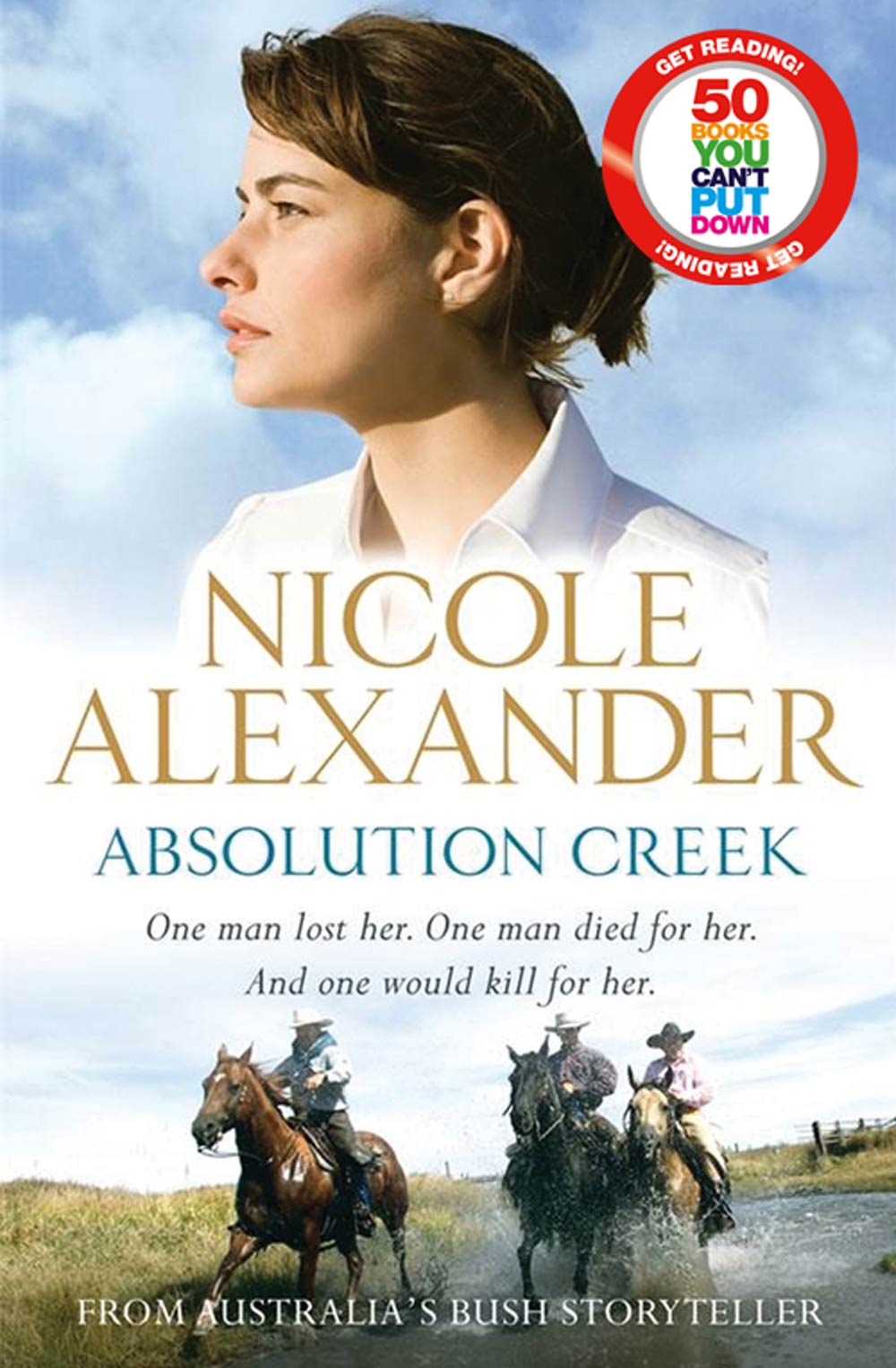
Our guest today is Nicole Alexander who is the author of eight novels: The Bark Cutters, A Changing Land, Absolution Creek, Sunset Ridge, The Great Plains, Wild Lands and River Run. An Uncommon Woman will be released on 3 July 2017. Nicole lives in north-west NSW, Australia and when she's not writing or chatting to book-lovers you can find her on the family property.

The Bark Cutters was short-listed for an Australian Book Industry Award. Both Absolution Creek and Sunset Ridge were chosen for the '50 Books You Can't Put Down' Get Reading campaign. The Great Plains was chosen in Better readings Top 100 Books in both 2015 & 2016.
You can connect with Nicole via her website, blog, Facebook, and Twitter.

What is the inspiration for your current book?

An Uncommon Woman began with an idea based on a 1933 newspaper article in the Tasmanian Examiner. It reported that a woman had purchased a Queensland pastoral station. The fact that this buying of land warranted a headline in an island state far removed from the dusty interior of Australia signified the importance and the uniqueness of the event. The world had just staggered through the great stock market crash of 1929 and was in the grip of a devastating recession and yet here was a woman laying claim to a remote rural property. 


Is there a particular theme you are exploring in this book?

There are a number of themes, however love versus ambition is the predominant one. It’s an interesting theme to address in an historical novel, where your lead character is a female.  In the past and to a limited extent today, women’s lives were curtailed by the dictates of society. For a woman to push through the boundary of conformity and to aspire to a different life in a rural environment in the late 1920s (the period An Uncommon Woman is set), requires the type of character that writers love to conjure from the ether.

Which period of history particularly interests you? Why?

While I have written about our convict and military past, I am drawn to our wider pastoral legacy. We are so much more than our western society origin stories of coastal settlement. And our inland history allows a writer to explore the contribution made to the growth of Australia by all; Indigenous Australians, Chinese, Greeks, Italians etc against the rich tapestry of pastoral life.


What resources do you use to research your book?

Once I’ve decided on a time period and location I then read widely on the subject, both non-fiction and fiction. I utilize archives from state libraries and on-line resources. These may include newspaper articles, family and regional histories, physical and digital books and files. I also investigate my own family’s pastoral records if appropriate. This ensures I get a rounded view of both the period and setting that I’m writing about. It is easy to become immersed in research, so once I’ve begun writing I then only tend to research a specific area on a ‘need-to’ basis.

What is more important to you: historical authenticity or accuracy?

Both are important. While ensuring your work is as realistic as possible is vital, accuracy most definitely has its place. I stick to dates where possible, consider world events and the impact they have on a particular time/characters.

Which character in your current book is your favourite? Why?

In An Uncommon Woman, my main character, Edwina is my favourite.  I wanted her to break free of the restrictions of her gender and the society in which she lived. To forge a place for herself beyond the dictates of men, whether they be father, brother or lover. I wanted her to be feisty and determined. A product of her environment.

Are you a ‘plotter’ or a ‘pantser’? How long does it generally take you to write a book?

I’m definitely a pantser. Many authors love the structure plotting gives them. However I write the first few chapters and then sit back and see how my characters evolve. I don’t want to be so controlled that I don’t have room to manoeuvre if my character leads me in a different direction.
An Uncommon Woman is my eighth novel in eight years. So it takes roughly about 8 months to produce a manuscript.

Which authors have influenced you?

Ernest Hemingway, for his sparse prose, Larry McMurtry, particularly his 1985 western novel, Lonesome Dove. The word epic does actually apply to this work. I love Michael Ondaatje. The English Patient stands out for me and D’Arcy Niland’s Australian masterpiece, The Shiralee. I look for authors who have beautiful prose, intriguing storylines and worlds where the landscape is carefully considered.  

What advice would you give an aspiring author?

You’ll only become a writer if you practice. It’s all about placing your backside in the chair and then… Redraft, redraft, redraft. Make that manuscript shine like a pearl.
Tell us about your next book or work in progress.
At the moment I’m having a short break….


Set in rural Queensland in 1929, An Uncommon Woman is the captivating story of a very modern woman who refuses to be held down by the conventions of the past . . .

Inspired by a real newspaper story from 1933, An Uncommon Woman is an epic tale of duty, ambition, prejudice and love, from the pen of bestselling author Nicole Alexander.

A new world is waiting for her . . .

It’s 1929, and the world is changing. Cars are no longer the privilege of the rich. Hemlines are rising. Movies are talking. And more and more women are entering the workforce.
For Edwina Baker, however, life on her family’s property in Western Queensland offers little opportunity to be anything other than daughter, sister and, perhaps soon, wife.
 
But Edwina wants more. She wants to see the world, meet new people, achieve things. For while she has more business sense than her younger brother, it will be Aiden who one day inherits the family business.

Then the circus comes to town. Banned from attending by her father, Hamilton, Edwina defiantly rides to the showground dressed as a boy. There she encounters two men who will both inadvertently alter the course of her life: pastoralist Mason with his modern city friends; and Will, a labourer who also dreams of escape.

And when the night ends in near-disaster, this one act of rebellion strikes at the heart of the Baker family. Yet it also offers Edwina the rare chance to prove herself in a man’s world. The question is, how far is she prepared to go, and how much is she prepared to risk?
 
 
Many thanks Nicole. Best wishes for the launch of An Uncommon Woman.

Nicole's books are available via Penguin Random House as follows:
An Uncommon Woman, River Run, Wild Lands, The Great Plains, Sunset Ridge, Absolution CreekA Changing Land and The Bark Cutters.

HNSA 2017 Conference

The HNSA 2017 Melbourne Conference is being held on 8-10 September 2017 at Swinburne University. Nicole Alexander will be appearing on Saturday 9 September at in the following panel:

First Encounters and Our Colonial Past

How do historical novelists approach researching and writing colonial and convict pasts?  What particular challenges must be faced in portraying the meeting of First Peoples with Europeans?  Lucy Treloar, Deborah Challinor, Andrew Peters and Nicole Alexander discuss these issues with Josie Arnold.

This celebration of the historical fiction genre will showcase over 60 speakers discussing inspiration, writing craft, research, publishing pathways and personal histories in our weekend programme. Among the many acclaimed historical novelists participating are Kerry Greenwood, Kate Forsyth, Deborah Challinor, Libby Hathorn, Lucy Treloar, Sophie Masson, Sulari Gentill, Robert Gott and Arnold Zable. The HNSA’s speakers’ list is available on the HNSA website.

In addition to the two stream weekend programme, there will be ten craft based super sessions and two research masterclasses. You won’t want to miss our interactive sessions on armour and historical costumes either! Manuscript assessments will be conducted by industry experts, Alison Arnold and Irina Dunn. Our free extended academic programme is open for general admission but bookings are essential.

Our First Pages Pitch Contest offers an opportunity for submissions to be read aloud to a panel of publishers. And we are delighted to announce the introduction of our inaugural HNSA Short Story Contest with a $500 prize!


Let’s make a noise about historical fiction!